Quick answer: Oral health supplements, mostly built around oral probiotics, are aimed at supporting the balance of bacteria in the mouth to help with gum health, fresh breath, and cavity resistance, alongside regular brushing and flossing, not instead of them. Some strains and ingredients like xylitol have real research behind them, but no supplement replaces a dentist for diagnosed gum disease or cavities.
- What Is Oral Health Support?
- What Is the Oral Microbiome?
- Signs Your Oral Microbiome May Be Out of Balance
- When to See a Dentist
- Oral Health and the Rest of the Body
- Diet’s Role in Oral Microbiome Health
- Common Myths About Oral Probiotics
- Habits That Matter More Than Any Supplement
- How Oral Health Supplements Work
- Ingredients Worth Knowing
- How We Evaluate These Products
- Comparing Every Oral Health Supplement We’ve Reviewed
- How to Choose the Right One
- FAQ
- Related Reading
If you’ve tried every toothpaste and mouthwash on the shelf and still deal with gum sensitivity, bleeding when you brush, or bad breath that won’t go away, this oral health guide is for you. These products are one of the fastest-growing categories in the wellness space, built around a simple but genuinely researched idea: the bacteria living in your mouth matter just as much as how often you brush.
This guide covers what the oral microbiome actually is, the daily habits with the strongest evidence behind them, how oral probiotic supplements are typically formulated, and an honest, side-by-side look at every product in this category we’ve reviewed on Health Product Verdict. If you already know which product you’re interested in, jump straight to the comparison section. If you want the full picture first, keep reading.
What Is Oral Health Support?
“Oral health support” in the supplement sense refers to products, usually chewable tablets, dissolvable candies, or probiotic capsules, designed to complement (not replace) brushing and flossing by targeting the bacterial balance inside the mouth. This is a meaningfully different approach from traditional oral care, which focuses almost entirely on mechanically removing plaque and killing bacteria indiscriminately with antiseptic mouthwash.
None of the products in this guide are intended to diagnose, treat, or cure gum disease, cavities, or any other dental condition. They’re formulated as daily wellness support, and regular dental checkups remain essential regardless of which, if any, of these products you try.
What Is the Oral Microbiome?
According to the National Institute of Dental and Craniofacial Research (NIDCR), the mouth hosts one of the most diverse microbial communities in the human body, made up of hundreds of different bacterial species living on the teeth, gums, tongue, and soft tissues. Most of these bacteria are harmless or even beneficial, but an imbalance, too many harmful, acid-producing species relative to beneficial ones, is linked to plaque buildup, gum inflammation, and the volatile sulfur compounds that cause bad breath.
This is the same underlying logic behind gut health probiotics, applied to a completely different part of the body: rather than trying to eliminate all bacteria, the goal is shifting the balance toward the species associated with a healthier mouth. It’s a genuinely active area of dental research, not just a marketing borrow from the gut-health trend, though as with gut probiotics, the specific finished-product research is still much thinner than the general microbiome research it’s based on.
Traditional oral care, brushing, flossing, and antiseptic mouthwash, largely treats all bacteria as the enemy. That approach works reasonably well for mechanically removing plaque, but it doesn’t distinguish between harmful, acid-producing species and the beneficial bacteria that help keep the harmful ones in check. Over-reliance on strong antiseptic mouthwash, in particular, can end up disrupting the mouth’s natural bacterial balance in ways that aren’t obviously connected to the mouthwash itself. This is the gap oral probiotic supplements are trying to fill: adding back or reinforcing the beneficial species rather than just removing bacteria indiscriminately.
Signs Your Oral Microbiome May Be Out of Balance
- Is PurDentix Legit? An Honest 2026 Review
- Bad breath that returns within hours of brushing, or doesn’t fully resolve even with mouthwash
- Bleeding gums when brushing or flossing, even with a gentle technique
- Recurring cavities despite consistent brushing and flossing habits
- A persistently coated or white-ish tongue
- Tooth sensitivity to hot, cold, or sweet foods that isn’t explained by a known dental issue
For a focused look at one of these specifically, see our guide: How to Get Rid of Bad Breath Naturally. As with any of these signs, if they’re severe, persistent, or worsening, see a dentist before trying any supplement, since some can indicate a dental condition that needs professional treatment.
When to See a Dentist Instead of Reaching for a Supplement
These supplements are designed for general support, not diagnosis or treatment of dental disease. A few situations call for a dentist’s visit before anything else:
- Visible swelling, a loose tooth, or persistent pain in the gums or teeth
- Bleeding that’s heavy, doesn’t improve with better brushing technique, or is accompanied by pain
- Bad breath that’s sudden in onset rather than gradual, which can sometimes point to a specific infection needing treatment
- It’s been more than six months since your last dental checkup, regardless of symptoms
None of the products covered in this guide are a substitute for professional diagnosis when any of these apply.
Oral Health and the Rest of the Body
One reason oral health has gotten more research attention in recent years is its documented connection to broader systemic health. Chronic gum inflammation has been studied in relation to cardiovascular health and blood sugar regulation, and the mouth is increasingly understood as a gateway that reflects, and potentially influences, health elsewhere in the body. This doesn’t mean an oral probiotic can substitute for cardiovascular or metabolic care, but it does explain why oral health has moved from being treated as a purely cosmetic concern to a more central part of overall wellness discussions.
Diet’s Role in Oral Microbiome Health
What you eat shapes the oral microbiome just as directly as it shapes the gut microbiome, and it’s a factor that no supplement can fully offset. Sugar and refined carbohydrates are the primary fuel source for the acid-producing bacteria most closely linked to cavities and enamel erosion; every time you eat something sugary, those bacteria get a burst of fuel and produce acid as a byproduct, which is why frequent snacking on sugary foods is generally worse for your teeth and gums than eating the same total amount of sugar in fewer sittings.
On the other side, crunchy fruits and vegetables mechanically help clean the tooth surface as you chew, and foods rich in calcium and phosphorus (dairy, leafy greens, nuts) support the minerals that make up enamel itself. This is part of why oral probiotics are positioned as a complement to diet and hygiene, not a way around them: no amount of beneficial bacteria fully cancels out a diet that’s constantly feeding the harmful species on the other side of the balance.
Common Myths About Oral Probiotics
Myth: Oral probiotics can replace brushing and flossing. Every product covered in this guide is explicit that it’s a complement to, not a replacement for, mechanical plaque removal. Skipping brushing in favor of a supplement isn’t supported by any of the research behind these products.
Myth: Antibacterial mouthwash and oral probiotics work the same way. They’re actually somewhat at odds. Strong antiseptic mouthwash kills bacteria broadly, including the beneficial species oral probiotics are trying to introduce or support. Some brands specifically recommend using antiseptic mouthwash sparingly, or at a different time of day, if you’re also taking an oral probiotic.
Myth: More probiotic strains automatically means a better product. What matters more than strain count is whether the specific strains included have research behind their role in this area specifically (not just gut health, where most probiotic research originates), and whether they survive in a form that can actually colonize the mouth rather than just passing through.
Habits That Matter More Than Any Supplement
- Brush twice daily with fluoride toothpaste. Still the single most evidence-backed oral health habit there is.
- Floss or use an interdental brush daily. Brushing alone misses roughly a third of tooth surfaces where plaque builds up between teeth.
- Limit sugary and acidic foods and drinks. These directly feed the harmful, acid-producing bacteria associated with cavities and gum disease.
- Stay hydrated. Saliva is one of the mouth’s natural defenses against harmful bacteria; chronic dry mouth is linked to a higher risk of cavities and bad breath.
- See a dentist twice a year. No supplement replaces professional cleaning and early detection of problems that need clinical treatment.
How Oral Health Supplements Work
Most products in this category work through one or more of three mechanisms: introducing beneficial bacterial strains that compete with harmful species for space and resources, providing prebiotic fiber (like xylitol) that feeds beneficial bacteria while starving harmful ones, or delivering minerals and enzymes that directly support enamel and gum tissue. The delivery format matters here in a way it doesn’t for most supplements: because the goal is influencing bacteria living in the mouth itself, chewable or dissolvable formats (as opposed to swallowed capsules) allow more direct contact time with oral tissue.
This is also why you’ll notice every product in this category is taken by chewing or letting it dissolve slowly, rather than swallowing it whole like a typical capsule supplement. A probiotic capsule swallowed whole is designed to survive stomach acid and colonize the gut further down the digestive tract, which does nothing for bacteria living in the mouth itself. The chewable or dissolvable format is a deliberate formulation choice, not just a texture preference.
Ingredients Worth Knowing
The most common probiotic genus across this category, with individual strains studied for their role in supporting a balanced oral microbiome. Appears in ProDentim (L. Paracasei, L. Reuteri) and DentaBiome (L. Plantarum, L. Salivarius, L. Rhamnosus).
Strains specifically studied for oral cavity colonization, as opposed to gut-focused probiotic strains repurposed for oral use. ProDentim includes B. Lactis BL-04®.
A sugar alcohol that beneficial oral bacteria can’t easily use for energy, while harmful, acid-producing bacteria struggle to metabolize it at all, which is part of why it’s a near-universal ingredient in this category. Appears in DentaBiome and PowerBite.
Naturally occurring enzymes and proteins with antimicrobial properties, studied for their role in supporting a healthy balance of oral bacteria. Lysozyme appears in PowerBite and Synadentix; lactoferrin in Synadentix.
Mineral compounds included for their role in supporting enamel remineralization. MCHA appears in Synadentix; calcium carbonate in PowerBite.
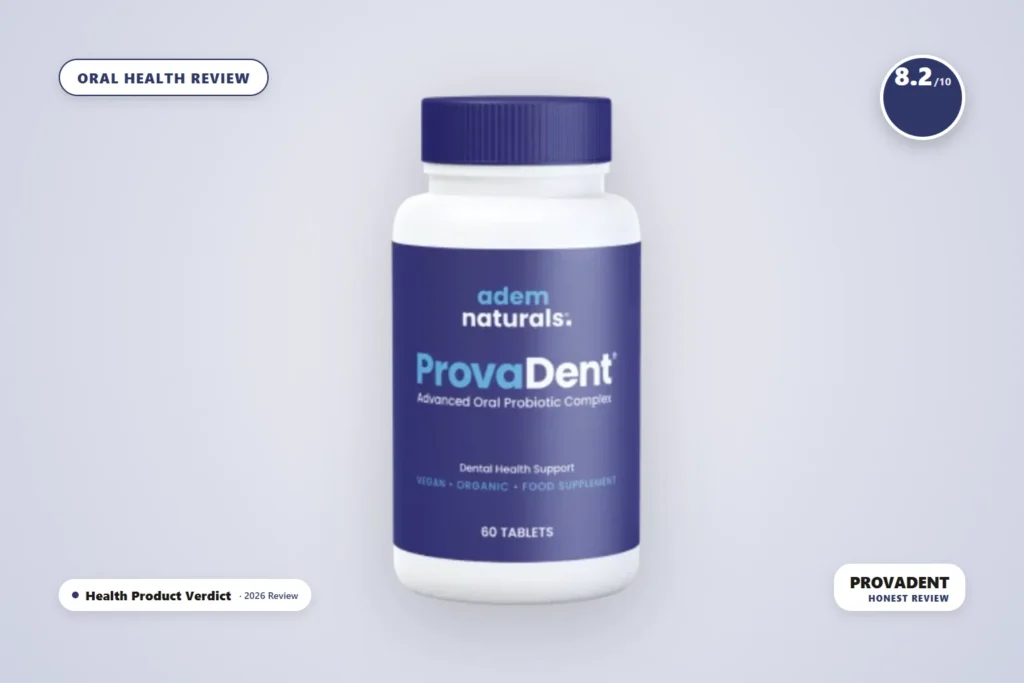
Plant-derived ingredients included primarily for antioxidant content, appearing across several formulas as supporting ingredients (cranberry and purple carrot in ProvaDent, guava in Synadentix).
How We Evaluate These Products
Every review on this site, including the five covered in this guide, is scored against the same criteria, so the comparison below is apples-to-apples rather than each product grading itself against its own marketing.
- Ingredient quality: whether the named strains and compounds have real, independent research behind their role specifically in this area.
- Scientific evidence: whether the finished product itself has been separately tested, which is rare across this entire category, and we say so plainly when it applies.
- Format and usability: whether the chewable or dissolvable format is realistic to use daily, and whether it tastes reasonable enough that people will actually stick with it.
- Value for money: price per bottle at the best available package, weighed against the guarantee length.
- Manufacturer trust: whether the company discloses who they are, where the product is made, and what quality standards they follow.
Comparing Every Oral Health Supplement We’ve Reviewed
We’ve reviewed five oral health supplements in depth. Here’s an honest side-by-side, based on our full reviews of each. Scores reflect our overall assessment; read the full review for the complete ingredient breakdown, pricing, and our reasoning.
| Product | Score | Format | Best For | Guarantee |
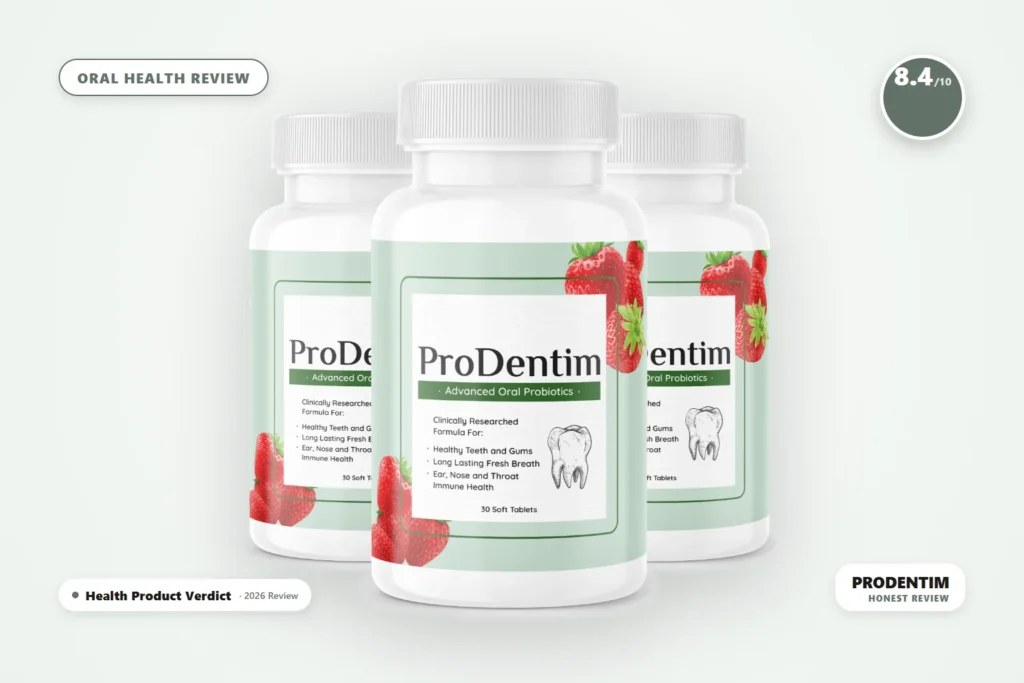
| ProDentim | 8.4/10 | Chewable candy | Adults with recurring oral health issues | 60-Day |
| DentaBiome | 8.3/10 | Chewable tablet | Gum bleeding, bad breath, recurring cavities | 60-Day |
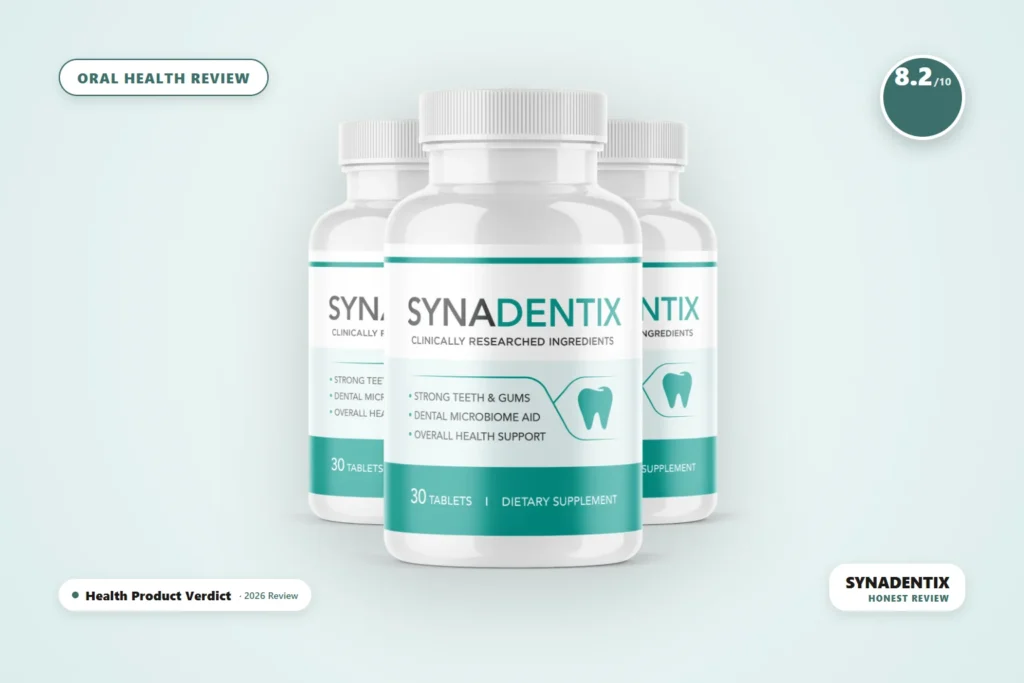
| Synadentix | 8.2/10 | Chewable tablet | Enamel sensitivity and gum concerns | 90-Day |
| PowerBite | 7.8/10 | Dissolvable candy | Adults who prefer a candy-like format | 60-Day |
| ProvaDent | Not scored | Chewable tablet | Gum bleeding, bad breath, cavity-prone teeth | 60-Day |
Want a shorter, ranked take on the top options? See our Best Oral Health Supplements 2026 roundup.
How to Choose the Right One
- Want the longest guarantee window? Synadentix’s 90-day guarantee is the longest in this comparison.
- Prefer a candy-like format over a tablet? PowerBite and ProDentim are both designed to taste more like a treat than a supplement.
- Dealing with enamel sensitivity specifically? Synadentix’s mineral-focused formula (MCHA) leans into remineralization more than the others.
- Want the most oral-specific probiotic strains? ProDentim’s BLIS-style strain (B. Lactis BL-04®) is studied specifically for oral colonization, not just repurposed from gut-health research.
One more filter worth applying regardless of which product you’re considering: taste and daily usability. A supplement with excellent ingredients doesn’t help if you stop taking it after a week because you don’t like the flavor. Since chewable and dissolvable formats depend on daily consistency to work, and the taste is genuinely subjective from person to person, it’s worth reading the customer feedback in each full review rather than relying on ingredient quality alone.
FAQ
Can oral probiotics replace brushing and flossing?
No. Every product in this guide is designed as a complement to standard oral hygiene, not a replacement for it. Brushing twice daily and flossing remain the foundation of a healthy mouth regardless of which supplement, if any, you try.
How long does it take to notice a difference?
Across the products we’ve reviewed, most brands suggest evaluating results over several weeks of consistent daily use, since shifting the oral microbiome’s balance is a gradual process rather than an overnight change.
Are oral probiotics safe to use with antiseptic mouthwash?
They can work against each other, since strong antiseptic mouthwash kills bacteria broadly, including the beneficial strains an oral probiotic is trying to support. If you use both, consider using mouthwash at a different time of day, or check the specific product’s own guidance.
Can oral health supplements really improve bad breath?
Persistent bad breath is often linked to bacterial imbalance and volatile sulfur compounds produced by certain oral bacteria, which is the mechanism these supplements target. Individual ingredients like xylitol and specific probiotic strains have research behind this role, though the complete finished formulas in this category haven’t typically been separately clinically trialed.
Which oral health supplement should I start with?
There’s no single universal answer, since the right pick depends on your priorities. If you want the longest risk-free trial window, Synadentix stands out with its 90-day guarantee. If you specifically want oral-targeted probiotic strains rather than repurposed gut strains, ProDentim is worth a closer look. Read the full comparison table above, or the individual reviews linked throughout this guide, before deciding.
Do children need a different oral probiotic than adults?
Every product covered in this guide is formulated and marketed for adults. None of the reviews on this site cover pediatric oral health supplements specifically, and dosing, strain selection, and safety considerations can differ meaningfully for children. Talk to a pediatric dentist before giving any adult-formulated oral health supplement to a child.
Related Reading
- What’s the Best Probiotic for Bad Breath?
- Why Does My Breath Smell Like It’s Coming From My Stomach?
- How to Choose the Best Supplements: A Buyer’s Guide
- How to Get Rid of Bad Breath Naturally
- Gum Disease Stages Explained: From Gingivitis to Periodontitis
- Does Oil Pulling Actually Work for Oral Health?
- Best Oral Health Supplements 2026: Top 5 Ranked
- ProDentim Review
- DentaBiome Review
- Synadentix Review
- PowerBite Review
- ProvaDent Review
Health Product Verdict provides independent analysis and reviews of health-related products. Our content is for informational purposes only and does not constitute medical advice. Always consult a qualified dentist for the diagnosis and treatment of any oral health condition.