
Oral probiotics are one of the fastest-growing categories for bad breath, but not every product on the shelf is backed the same way. If you’re trying to figure out the best probiotic for bad breath, the strain listed on the label matters more than the marketing on the front of the bottle.
Quick answer: there isn’t one single “best” probiotic for bad breath, but a small number of specific strains, mainly Streptococcus salivarius K12 and M18, and Weissella cibaria (particularly the CMU strain), have the most direct clinical trial evidence for reducing the volatile sulfur compounds that actually cause oral malodor. Lactobacillus reuteri has supporting evidence too, though less halitosis-specific. If a product doesn’t list its exact strains, or lists only generic “probiotic blend,” that’s a real gap worth noticing.
What the Research Actually Shows
A 2025 systematic review of randomized controlled trials found that certain probiotic strains meaningfully reduced volatile sulfur compounds (VSCs), the specific gases responsible for oral malodor, and improved organoleptic (smell) test scores compared to placebo. Source: PMC.
This matters because “probiotic” is a broad category. The research doesn’t support probiotics as a class being effective for bad breath, it supports specific, tested strains at specific doses. A product built around an untested strain, even a genuinely beneficial one for gut health, hasn’t been shown to do the same thing for your breath.
The Strains With the Strongest Evidence
- Streptococcus salivarius K12 and M18: among the most studied strains for oral malodor, shown in trials to reduce VSC levels
- Weissella cibaria (CMU strain): a randomized controlled trial found total VSCs were significantly lower in the probiotic group than placebo after 8 weeks, with meaningful improvement in bad-breath scores. Source: PMC.
- Lactobacillus reuteri: supporting evidence for oral health broadly, though the research is less specifically focused on halitosis than the two strains above
Most of the positive trials used lozenges or chewable formats taken consistently for at least 4 to 8 weeks. None of the research supports an overnight fix, this is a slow shift in the oral microbiome, not an instant mint.
Choosing the Best Probiotic for Bad Breath
When comparing options for the best probiotic for bad breath, check the label for the exact strain name and code (like “K12” or “CMU”), not just the genus. “Contains beneficial probiotics” without a named, studied strain is a marketing claim, not a research-backed one. A visible CFU count and a format meant to sit in the mouth (lozenge, chewable, mint) rather than a capsule meant to be swallowed also matter, since the mechanism relies on the bacteria colonizing the mouth itself.
Limitations Worth Knowing
Even the best-studied strains don’t have a large body of research behind them compared to more established interventions, and many of the available trials are small with real methodological limitations. Probiotics also address one plausible mechanism (oral bacterial balance), not every possible cause of bad breath, gum disease, dry mouth, sinus issues, and digestive causes like GERD can all contribute independently.
When to See a Doctor Instead
See a dentist if bad breath comes with bleeding gums, loose teeth, or visible plaque buildup, that points toward a dental cause a probiotic alone won’t fix. See a doctor if it’s accompanied by heartburn, a sour taste, or other digestive symptoms, or if it persists despite good oral hygiene and a genuinely strain-matched probiotic tried consistently for several weeks.
Possible Solutions Worth Considering
Of the oral health products we’ve reviewed, here’s how two compare on the strain question specifically.
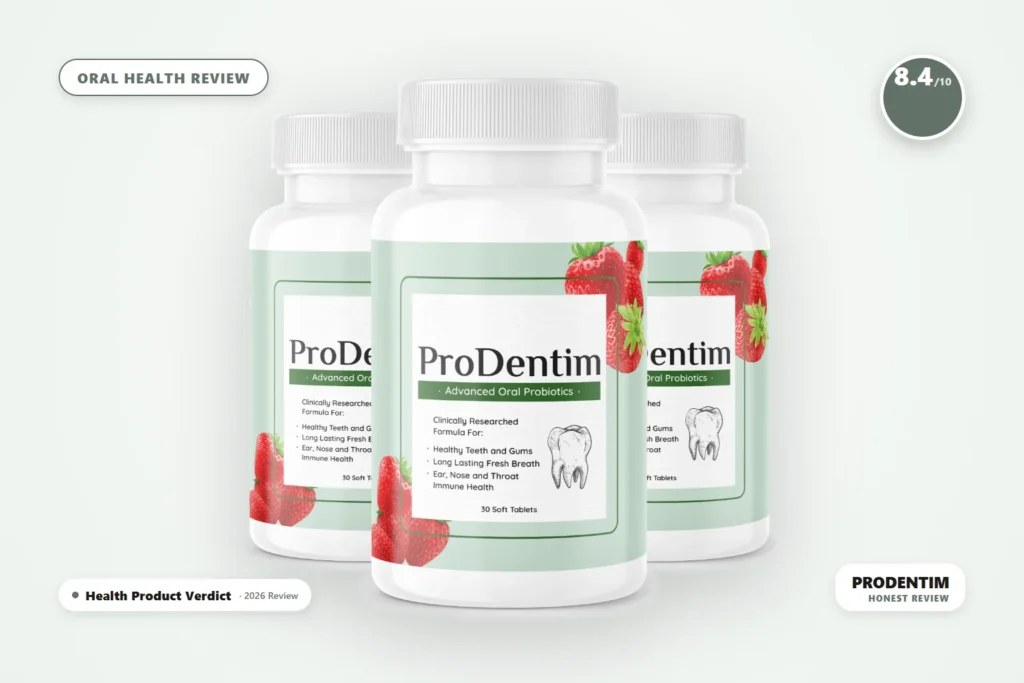
ProDentim
Includes Lactobacillus reuteri as part of its 3.5 billion CFU blend, one of the strains with supporting (though not halitosis-specific) research behind it, alongside other strains aimed at broader oral health.
Read our full ProDentim review for the complete breakdown.
DentaBiome
Takes a different approach, a postbiotic formula (metabolic byproducts of beneficial bacteria rather than live strains) aimed at supporting a healthier oral bacterial balance overall. It doesn’t use the specific halitosis-studied strains above, but works through a related mechanism worth knowing about.
Read our full DentaBiome review for the complete breakdown.
FAQ
What is the best probiotic for bad breath?
There’s no single winner, but strains like Streptococcus salivarius K12 and M18, and Weissella cibaria CMU, have the strongest direct clinical trial evidence for reducing the compounds that cause oral malodor.
How long does it take for an oral probiotic to help bad breath?
Most positive clinical trials used consistent daily use for 4 to 8 weeks before measuring results. It’s not an instant fix.
Do all probiotics help with bad breath?
No. The research supports specific, tested strains, not probiotics as a general category. A product without a named, studied strain hasn’t been shown to have the same effect.
Can a probiotic replace brushing and flossing?
No. Every study on this topic used probiotics alongside normal oral hygiene, not as a replacement for it.
Why doesn’t my probiotic mouthwash or mint list a strain?
Many consumer products emphasize “probiotics” as a category without naming a specific studied strain. That’s a marketing simplification, and it’s worth being more skeptical of than a product that names its exact strain and cites research behind it.
Conclusion
The best probiotic for bad breath isn’t a specific brand, it’s whichever product actually uses one of the strains with real clinical trial evidence behind it, taken consistently for several weeks alongside normal oral hygiene. Check the label for a named strain, not just the word “probiotic,” before deciding what’s worth trying.
For the full picture on oral health causes, habits, and every oral care product we’ve reviewed, see our Oral Health: The Complete 2026 Guide.
Related Reading
- Oral Health: The Complete 2026 Guide
- How to Get Rid of Bad Breath Naturally in 2026
- Why Does My Breath Smell Like It’s Coming From My Stomach?
This article is for informational purposes only and does not constitute medical advice. Consult a dentist or doctor regarding persistent bad breath or any oral health condition.