Bleeding gums after brushing get dismissed all the time, “brush harder” or “use a softer toothbrush” and move on. But that early sign is actually the first of several defined gum disease stages, and how far the disease has progressed changes both what treatment looks like and whether the damage can be reversed at all.
Quick answer: gum disease progresses through four recognized stages, starting with gingivitis (reversible, gum-only inflammation) and advancing through slight, moderate, and advanced periodontitis, each marked by deeper gum pockets and more bone loss. Gingivitis is the only fully reversible stage. Once it progresses to periodontitis, the damage to bone and gum tissue is permanent, though further progression can still be stopped with treatment.
Stage 1: Gingivitis
Gingivitis is the mildest and earliest stage, and it only affects the gums, not yet the bone or deeper supporting structures underneath. Per Northwell Health, typical symptoms include gum swelling, inflammation, and bleeding when brushing or flossing. It’s often described as painless, which is exactly why it goes unnoticed or gets brushed off (literally) as normal.
This is the one stage where the damage is fully reversible. With consistent brushing, flossing, and professional cleaning, gum tissue at this stage can return to a healthy state, according to research archived by the National Institutes of Health (NIH).
Stage 2: Slight Periodontitis
Once gingivitis is left unaddressed, bacteria can spread below the gumline to the bone, and the condition becomes periodontitis, meaning the disease now involves the structures that actually anchor the teeth, not just the surface gum tissue. Northwell Health notes this stage brings gum detachment of about 4-5 mm (a healthy gum pocket depth is typically 1-2 mm), along with continued bleeding, redness, and bad breath.
This is the point where simple oral hygiene alone can no longer reverse the damage already done, even though further progression can still be managed and slowed with proper treatment.
Stage 3: Moderate Periodontitis
Gum pocket depth increases further at this stage, to around 6-7 mm, which allows more bacteria to reach the bone and, from there, potentially the bloodstream. Symptoms overlap with stage two but intensify: more bleeding, increasing gum sensitivity, and the beginning of tooth shifting as the supporting structures weaken.
Stage 4: Advanced Periodontitis
This is the most destructive stage. As bacterial buildup accumulates along the base of the gumline, the immune system’s own response to fight it ends up eating away at gum tissue and bone in the process. Teeth can become loose, shift noticeably, or hurt when chewing, and both gum health and the jawbone itself are at risk at this point.
Why It Doesn’t Progress in a Straight Line
One detail that surprises people: periodontitis doesn’t necessarily worsen at a constant, predictable rate. Research summarized by the NIH describes the disease as progressing episodically, short bursts where tissue destruction actively happens, followed by longer stretches where the disease plateaus or even partially stabilizes. That doesn’t mean it’s safe to ignore between flare-ups, damage that’s already occurred generally doesn’t reverse itself, but it does explain why gum disease can seem to “pause” for a while before worsening again.
Risk Factors Worth Knowing
Gum disease starts with plaque, a sticky bacterial film that forms on teeth daily, but according to the Mayo Clinic, several factors make periodontitis more likely once gingivitis is present:
- Smoking or chewing tobacco, and vaping or recreational drug use
- Poor oral hygiene habits
- Hormonal changes, including pregnancy and menopause
- Obesity and poor nutrition, including low vitamin C intake
- Genetics and family history
- Certain medications that cause dry mouth or gum changes
- Conditions that lower immunity, and diseases like diabetes, rheumatoid arthritis, or Crohn’s disease
Anyone with several of these risk factors may benefit from more frequent professional cleanings than the standard 6-to-12-month schedule, since catching gum inflammation at the gingivitis stage is the only point where it’s fully reversible.
Why Gum Disease Affects More Than Your Mouth
Periodontitis isn’t just a dental problem confined to the mouth. Per Mayo Clinic, the bacteria involved can enter the bloodstream through inflamed gum tissue and are linked to effects elsewhere in the body, including respiratory disease, rheumatoid arthritis, coronary artery disease, preterm birth and low birth weight, and difficulty controlling blood sugar in people with diabetes. This connection is part of why dentists take gum disease seriously beyond just protecting individual teeth, and it’s a two-way relationship: conditions like diabetes also raise the risk of gum disease in the first place.
When to See a Dentist
Bleeding gums, even mild and only during brushing, is worth mentioning at your next dental visit rather than waiting, since catching gingivitis early is the only window where the damage is fully reversible. See a dentist sooner, not at your next scheduled cleaning, if you notice gum recession, persistent bad breath, gum tenderness, loose or shifting teeth, or pain when chewing, all signs that periodontitis may already be underway.
Possible Solutions Worth Considering
Alongside professional dental care, some people look for daily supplement support built around ingredients researched for gum and oral microbiome health.
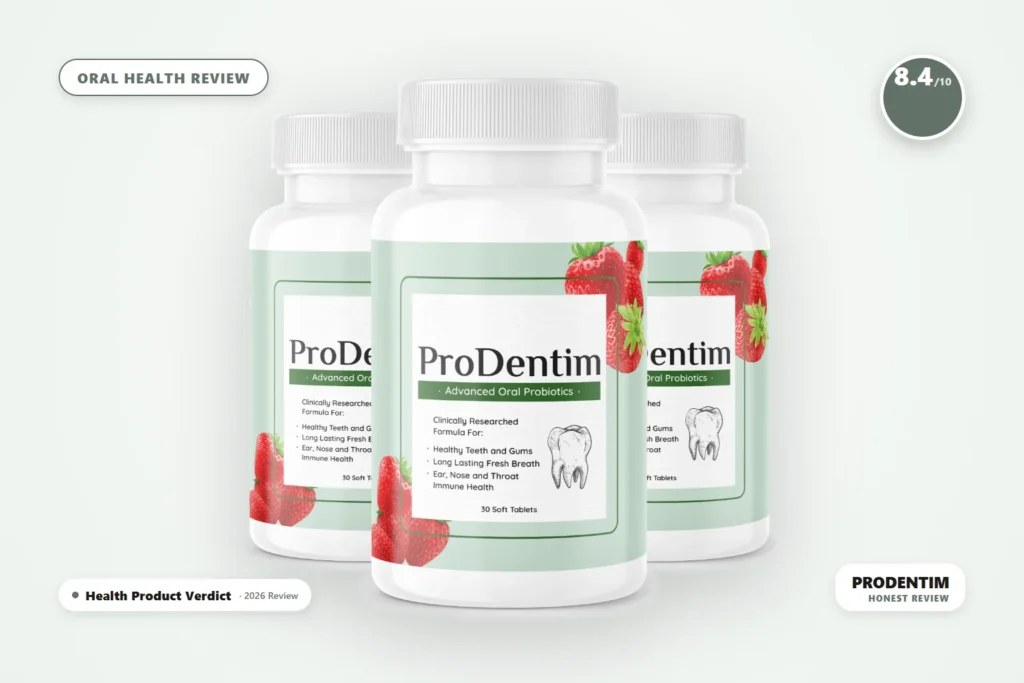
ProDentim
A daily oral probiotic formula built around ingredients researched for oral microbiome balance, intended to be used alongside brushing, flossing, and regular dental checkups rather than as a replacement for them.
Read our full ProDentim review for the complete breakdown.
DentaBiome
Another oral postbiotic formula, worth comparing against ProDentim on ingredients and price before deciding between the two.
Read our full DentaBiome review for the complete breakdown.
FAQ
How long does it take gingivitis to progress to periodontitis?
There’s no fixed timeline, it depends on oral hygiene habits, individual immune response, smoking status, and other risk factors. What’s consistent is that progression isn’t guaranteed: gingivitis that’s caught and treated with consistent hygiene and professional cleaning can be fully reversed before it ever becomes periodontitis.
How do I tell if I have gingivitis or periodontitis?
Gingivitis typically means bleeding, swelling, and redness confined to the gums, with no looseness or shifting of teeth. Periodontitis usually adds gum recession, persistent bad breath, deeper gum pockets, and eventually tooth movement or sensitivity. A dentist can measure actual gum pocket depth to confirm which stage you’re at.
Can periodontitis go away on its own?
No. Unlike gingivitis, periodontitis does not resolve without professional treatment. The bone and tissue damage that’s already occurred is permanent, though treatment can stop further progression and help manage the condition long-term.
How do you get rid of gingivitis and periodontitis?
Gingivitis responds to consistent brushing, flossing, and professional dental cleaning. Periodontitis requires professional treatment beyond home care, ranging from deep cleaning (scaling and root planing) at earlier stages to surgical procedures like bone or gum grafting for advanced cases.
Is bad breath always a sign of gum disease?
Not always, bad breath has several possible causes beyond gum disease. But persistent bad breath that doesn’t improve with normal oral hygiene is a common symptom starting around stage two (slight periodontitis), so it’s worth mentioning to a dentist rather than only masking it.
What causes gum disease in the first place?
It starts with plaque, a sticky bacterial film that forms on teeth constantly from the interaction of food sugars and starches with bacteria naturally present in the mouth. Brushing and flossing remove it daily, but if plaque is left in place, it hardens into tartar below the gumline within days, and tartar can only be removed with professional cleaning, not home brushing. The longer plaque and tartar sit, the more damage the bacteria inside them can do to gum tissue and, eventually, bone.
Conclusion
Gum disease stages run from fully reversible (gingivitis) to permanent bone and tissue damage (advanced periodontitis), and the difference between catching it early and letting it progress is significant. Bleeding gums aren’t something to brush off, they’re the earliest, and only fully reversible, warning sign in the entire progression.
For the full picture on causes, habits, and every oral health product we’ve reviewed, see our Oral Health: The Complete 2026 Guide.
Related Reading
- Oral Health: The Complete 2026 Guide
- How to Get Rid of Bad Breath Naturally in 2026
- How to Choose the Best Supplements: A Buyer’s Guide
This article is for informational purposes only and does not constitute medical or dental advice. Consult a dentist for diagnosis and treatment of gum disease symptoms.