Blue light glasses are marketed as a fix for tired, strained eyes from screen use, but if you’re wondering do blue light glasses actually work for eye strain, the honest answer from recent research is more disappointing than the marketing on the box.
Quick answer: research does not support blue light glasses as an effective fix for digital eye strain, despite how popular they’ve become. Digital eye strain (also called computer vision syndrome) has real, well-documented causes, but the amount of blue light from screens isn’t the main driver, and filtering it out doesn’t reliably reduce symptoms. What actually helps is proven, simple, and free: the 20-20-20 rule, screen distance and posture, and moderating total screen time.
Do Blue Light Glasses Actually Work? What Research Shows
A recent questionnaire-based study looking at long-term use of blue light-filtering glasses found underwhelming evidence for symptom improvement in digital eye strain, one of several findings across the research base that blue-blocking filters do not appear to prevent digital eye strain, despite their popularity. Source: PMC.
This doesn’t mean blue light glasses are harmful or a total scam, some people report subjective comfort wearing them, and blue light exposure close to bedtime does have a separate, more established effect on sleep timing. But specifically for eye strain relief, the evidence doesn’t back up the marketing claim.
The Real Causes of Digital Eye Strain
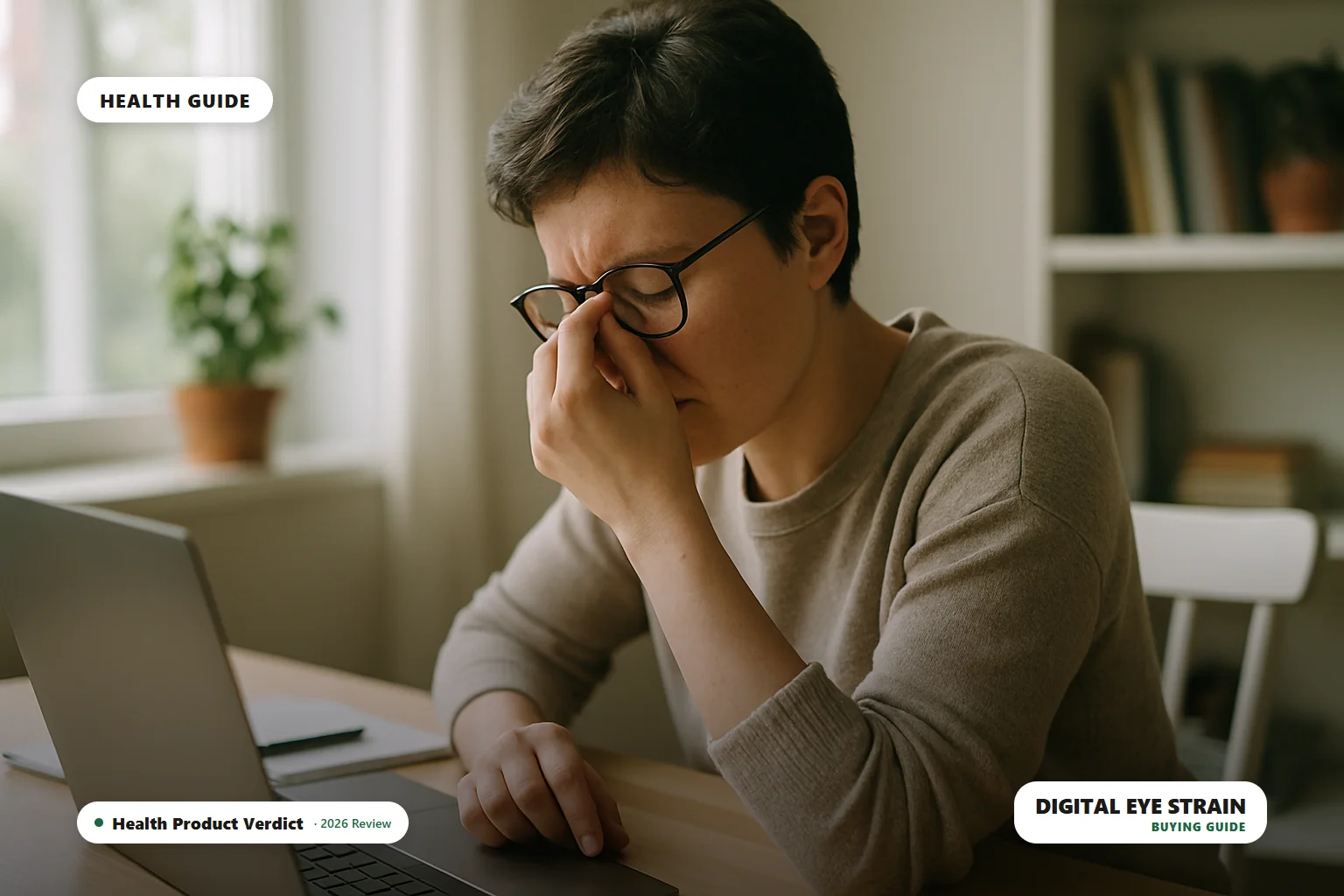
Digital eye strain, also called computer vision syndrome, is a group of symptoms from prolonged screen use: dry or irritated eyes, blurred vision, headaches, and neck or shoulder pain from posture. Source: Cleveland Clinic.
The real drivers are things like reduced blink rate while focused on a screen (leading to dryness), poor screen distance and positioning, uncorrected vision problems, and simply how many total hours you spend looking at a fixed distance. None of these are fixed by filtering out blue light specifically.
What Actually Helps
- The 20-20-20 rule: every 20 minutes, look at something 20 feet away for 20 seconds, shown to be a significant predictor of symptom relief
- Moderate total screen time: keeping daily screen time under roughly 6 hours is associated with symptom relief, while more than 4-5 hours is linked to higher strain
- Fix your ergonomics: screen positioned 4-5 inches below eye level and 20-28 inches away, feet flat, wrists supported
- Blink deliberately and use artificial tears if dryness is a big part of your symptoms
- Get an eye exam if you haven’t had one recently, uncorrected vision problems make screen use much more straining
When to See a Doctor
See an eye doctor if symptoms are severe, persistent despite the changes above, or accompanied by real pain, significant vision changes, or symptoms that don’t improve with breaks and better ergonomics. An eye exam can also catch an underlying vision correction need that’s making screen use harder than it should be.
Possible Solutions Worth Considering
Alongside the habit changes above, which are the best-evidenced first step, some people look for daily eye-health supplements as ongoing support for overall vision comfort.
Vision 20
A daily formula built around ingredients associated with eye health and comfort, intended as ongoing support rather than a direct fix for screen-related strain.
Read our full Vision 20 review for the complete breakdown.
iGenics
A capsule supplement built around ingredients aimed at supporting long-term vision health, taken daily alongside good screen habits.
Read our full iGenics review for the complete breakdown.
FAQ
Do blue light glasses actually work for eye strain?
Research does not support them as an effective fix for digital eye strain specifically. Some people find them subjectively comfortable, but the evidence doesn’t back the popular marketing claim.
Is the 20-20-20 rule actually backed by research?
Yes, adherence to the 20-20-20 rule (a 20-second break looking 20 feet away every 20 minutes) has been shown to be a significant predictor of symptom relief in digital eye strain research.
Does blue light from screens hurt your eyes?
The evidence connecting screen blue light specifically to eye strain or damage is much weaker than commonly assumed. Blue light’s more established effect is on sleep timing when exposure happens close to bedtime, not on eye strain during the day.
How much screen time is too much for eye strain?
Research associates daily screen time under about 6 hours with symptom relief, while more than 4-5 hours a day is linked to higher digital eye strain symptoms.
What should I do instead of buying blue light glasses?
Start with the 20-20-20 rule, fix your screen distance and posture, moderate total screen time, and get an eye exam if you haven’t had one recently. These have real research behind them for digital eye strain specifically.
Conclusion
Do blue light glasses actually work for eye strain? The honest answer, based on current research, is not reliably. Digital eye strain has real, well-understood causes that have nothing to do with blue light specifically, and the free, proven fixes (20-20-20 rule, better ergonomics, screen time moderation) do more than a pair of tinted glasses.
For the full picture on vision changes, eye strain, and every eye health product we’ve reviewed, see our Tired, Blurry Eyes? The Truth About Vision Strain and Eye Supplements.
Related Reading
- Tired, Blurry Eyes? The Truth About Vision Strain and Eye Supplements
- Vision Changes and Eye Strain: Causes and What Can Help
- Why Is My Vision Blurry After Eating?
This article is for informational purposes only and does not constitute medical advice. Consult an eye doctor if you have persistent eye strain, vision changes, or eye pain.