Good sleep support starts long before you reach for a supplement or a new pillow. If you’re lying awake at night, waking up groggy, or just not feeling rested no matter how many hours you spend in bed, this guide walks through what actually drives poor sleep, which signs are worth a doctor’s attention, and how the sleep products we’ve reviewed compare to one another.
Quick answer: most sleep problems come down to a mix of sleep hygiene (habits and environment), stress and circadian rhythm disruption, and sometimes an underlying medical issue. No supplement or product fixes all of that on its own. The most evidence-backed sleep support is consistent habits, and a small number of well-researched ingredients, like magnesium and melatonin, can help around the edges when used sensibly.
- Why Sleep Matters More Than You Think
- The Sleep Cycle Explained
- Common Signs of Poor Sleep
- When to See a Doctor
- Common Myths About Sleep
- Stress and the Racing Mind
- Daily Habits That Matter Most
- How Sleep Support Products Work
- Ingredients Worth Knowing
- How Much Sleep Do You Need?
- How We Evaluate These Products
- Comparing Every Product We’ve Reviewed
- How to Choose the Right One
- FAQ
Why Sleep Support Matters More Than You Think
Sleep isn’t just downtime. It’s when the body does much of its repair work, when the brain consolidates memories, and when hormones that regulate appetite, stress, and mood get rebalanced. According to the Sleep Foundation, most adults need seven to nine hours of sleep per night, yet a large share consistently fall short, and the effects compound over time.
Chronic poor sleep is linked to reduced concentration, low mood, weakened immune function, and a higher long-term risk of conditions like high blood pressure and metabolic issues. That’s why sleep support is worth taking seriously, not as a luxury, but as a foundation for the rest of your health. The good news is that sleep is also one of the most responsive systems in the body: small, consistent changes often produce noticeable improvements within a couple of weeks.
The Sleep Cycle: What Actually Happens While You Rest
Understanding why sleep support matters is easier once you know that sleep isn’t a single uniform state. Across the night, the body moves through repeated cycles of roughly 90 minutes, each made up of distinct stages that serve different purposes.
Light sleep is the transition phase, where your body starts to relax, your heart rate slows, and you drift out of wakefulness. Deep sleep (also called slow-wave sleep) is the physically restorative stage, when tissue repair, immune activity, and hormone regulation are most active. This is the sleep that leaves you feeling genuinely rested. REM sleep, where most vivid dreaming happens, is when the brain consolidates memories and processes emotions.
A common reason people feel unrested despite spending enough hours in bed is fragmented sleep that never lets them spend enough time in the deep and REM stages. Frequent waking, alcohol late at night, and an uncomfortable sleep environment all chip away at sleep quality even when total sleep time looks fine on paper. This is also why “how many hours” is only half the story, and sleep quality matters just as much as quantity.
Common Signs of Poor Sleep
Poor sleep doesn’t always look like lying awake for hours. It can be subtle, and many people don’t connect the daytime symptoms back to their nights. Common signs include:
- Trouble falling asleep, often tied to a racing mind or stress that won’t switch off at bedtime.
- Waking frequently during the night or waking too early and being unable to fall back asleep.
- Waking up unrefreshed, feeling like you barely slept even after a full night in bed.
- Daytime grogginess, low energy, or reliance on caffeine just to function through the afternoon.
- Irritability, brain fog, or difficulty concentrating, which are often the first things other people notice before you do.
When to See a Doctor
Occasional restless nights are normal and not a cause for concern. A few patterns, though, are worth a doctor’s visit rather than a new supplement. Loud snoring paired with gasping or pauses in breathing can be a sign of sleep apnea, a genuine medical condition that no over-the-counter product treats. Persistent insomnia lasting more than a few weeks, sleep problems that seriously affect your daytime functioning, or new sleep disruption alongside symptoms like chest discomfort, mood changes, or unexplained fatigue all deserve professional evaluation. A doctor can also check whether an existing condition or medication is the real driver before you spend money on a sleep aid.
Common Myths About Sleep
Myth: You can “catch up” on sleep at the weekend. Sleeping in on Saturday helps a little with short-term tiredness, but it doesn’t fully reverse the effects of a week of sleep debt, and swinging your schedule around actually disrupts your circadian rhythm further. Consistency matters more than the occasional long lie-in.
Myth: A supplement can replace good sleep habits. No pill, drop, or pillow overrides a bedroom that’s too bright, a late-night screen habit, or a caffeine-at-4pm routine. Supplements work best as a small addition on top of solid habits, not as a substitute for them.
Myth: More melatonin means better sleep. Melatonin is a signaling hormone, not a sedative, and research generally suggests low doses (often under 1mg) used at the right time work as well as or better than the large doses common in many products. More is not automatically better, and higher doses can leave some people groggy the next morning.
Stress, Anxiety, and the Racing Mind at Night
For a large number of people, the biggest barrier to falling asleep isn’t the body, it’s the mind. Lying down removes the day’s distractions, and suddenly worries, to-do lists, and replays of conversations get louder. This is one of the most common drivers of trouble falling asleep, and it’s why relaxation is such a central theme in sleep support ingredients like magnesium, L-theanine, and GABA.
Practical steps can help quiet a racing mind independent of any product. Keeping a notepad by the bed to “park” tomorrow’s worries, building a consistent wind-down routine in the 30-60 minutes before bed, and avoiding stimulating content or stressful conversations late at night all reduce the mental activation that keeps people awake. Some people find slow breathing or a short body-scan relaxation genuinely effective, and unlike a supplement, these cost nothing and can be used every night. When stress-driven sleeplessness becomes chronic or is tied to persistent anxiety, though, that’s worth raising with a healthcare professional rather than managing alone.
Daily Habits That Matter Most
Before adding any product, the habits below (often grouped under “sleep hygiene”) have the strongest, most consistent evidence behind them for better sleep:
- Keep a consistent schedule. Going to bed and waking up at roughly the same time every day, including weekends, is one of the single most effective things you can do for your circadian rhythm.
- Get morning light. Natural light exposure early in the day helps anchor your body clock and makes it easier to feel sleepy at night.
- Limit screens and bright light before bed. Blue light and mentally stimulating content in the hour before sleep can delay the natural rise in melatonin.
- Watch caffeine and alcohol timing. Caffeine can linger for many hours, and while alcohol may help you fall asleep, it fragments sleep quality later in the night.
- Keep the bedroom cool, dark, and quiet. A comfortable sleep environment, including proper pillow and neck support, makes a bigger difference than most people expect.
How Sleep Support Products Work
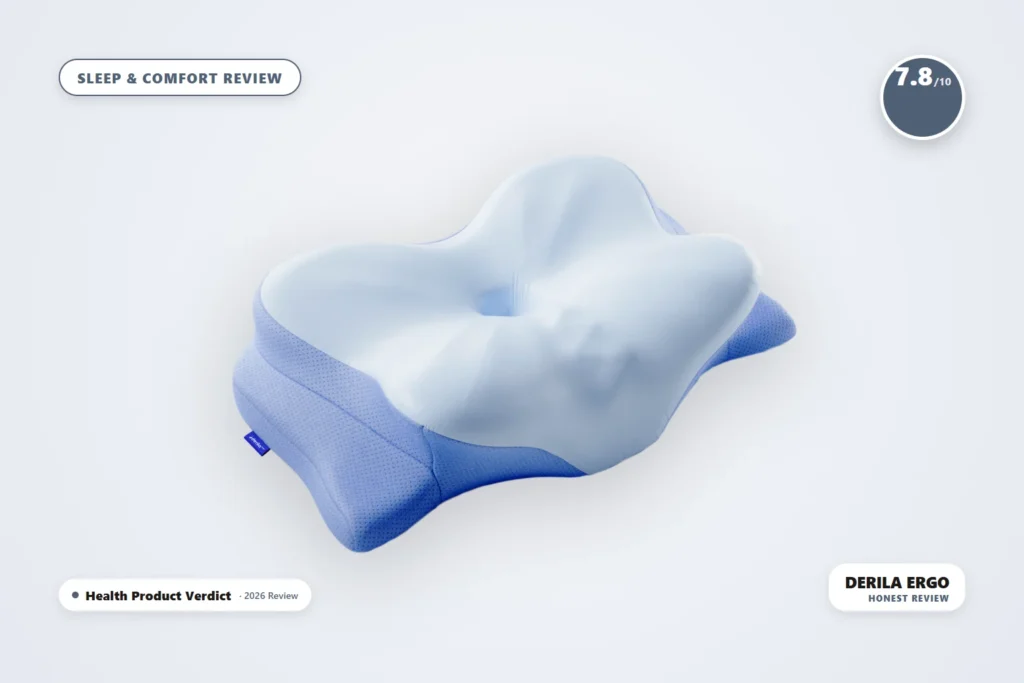
Products in this category generally take one of a few broad approaches, and they’re not all the same kind of thing. Ingestible sleep supplements, like YuSleep and PUREDOSE Magnesium, combine ingredients such as magnesium, melatonin, L-theanine, and botanical extracts to support relaxation and the body’s natural wind-down process. Physical sleep products, like the Derila Ergo memory foam pillow, take an entirely different route, addressing sleep comfort and neck support rather than body chemistry. Some people benefit from one approach, others from a combination.
None of these approaches work like a prescription sleep medication, and that’s actually a feature rather than a flaw for most people, since they avoid the dependency and grogginess concerns those carry. The realistic expectation for any sleep supplement or product is a gentle nudge toward better rest over a couple of weeks of consistent use, working alongside good habits rather than replacing them.
Ingredients Worth Knowing
A mineral involved in hundreds of body processes, including the regulation of relaxation and the nervous system. The glycinate/bisglycinate forms are among the better-tolerated and better-absorbed, and magnesium is one of the more consistently researched ingredients tied to sleep and calm. Featured in both YuSleep and PUREDOSE Magnesium.
A hormone the body produces naturally to signal that it’s time to sleep. As a supplement it’s best used in low doses and at a consistent time, and it’s more useful for shifting sleep timing (like jet lag) than as a general sedative. YuSleep uses a deliberately low 0.9mg dose.
Two compounds associated with calm and relaxation. L-theanine, found in tea, is studied for promoting a relaxed-but-alert state, while GABA is a calming neurotransmitter. Both are common in wind-down formulas. Featured in YuSleep.
A natural source of small amounts of melatonin and antioxidants, sometimes studied in connection with sleep quality. A gentler, food-derived ingredient rather than a heavy-hitting sedative. Featured in YuSleep.
Reading Labels in This Category
Sleep supplements are a category where the details on the label matter more than the marketing on the front. A few things worth checking before buying: whether the melatonin dose is reasonable (lower is often better, and a product boasting a very high dose isn’t necessarily superior); whether the full ingredient list and amounts are disclosed rather than hidden behind a “proprietary blend”; whether the product is made in a GMP-certified facility; and whether the guarantee period is long enough to actually judge results, since sleep changes take a couple of weeks to assess. For physical products like pillows, look for genuine certifications (such as CertiPUR-US for foam) rather than vague quality claims.
How Much Sleep Do You Actually Need?
Sleep needs shift across a lifetime, and while individuals vary, general guidance from sleep researchers gives a useful benchmark. Most healthy adults (18-64) do best with seven to nine hours per night. Older adults (65+) often need a similar amount but may find it naturally splits into lighter, more interrupted sleep. Teenagers typically need eight to ten hours, and school-age children more still.
The right number for you is the amount that leaves you feeling rested and alert through the day without relying on caffeine to get by. If you consistently wake unrefreshed even after eight or nine hours, the issue is more likely sleep quality or an underlying problem than simply needing more time in bed, which is exactly where good habits, and sometimes a sensible sleep support product, come in. Chasing more hours won’t help if the hours you already get are fragmented or shallow.
How We Evaluate These Products
For every product in this comparison, we read the official sales page, the full ingredient list or specifications where disclosed, the guarantee terms, and the FAQ section before writing a review. Where a manufacturer doesn’t publish specific details, such as exact ingredient amounts or independent testing, we say so directly rather than filling in the gap ourselves. Scores reflect ingredient or material transparency, the strength of research behind the named ingredients, manufacturing and certification standards, guarantee length, and overall value, not the marketing claims on the sales page.
Comparing Every Product We’ve Reviewed
We’ve reviewed three sleep products in depth, spanning two ingestible supplements and one physical sleep aid. Here’s an honest side-by-side, based on our full reviews of each.
| Product | Score | Type | Best For | Guarantee |
| PUREDOSE Magnesium | 8.0/10 | Liquid magnesium supplement | Adults wanting a transparent, well-tolerated magnesium in an easy liquid format | 180-Day |
| YuSleep | 7.8/10 | Liquid drops supplement | Adults wanting a multi-ingredient wind-down formula with a low melatonin dose | 60-Day |
| Derila Ergo | 7.8/10 | Memory foam pillow | Adults whose sleep issues are tied to neck comfort and support, not body chemistry | 60-Day |
How to Choose the Right One
- Want the most transparent supplement? PUREDOSE Magnesium discloses its full ingredient list and scored highest in our comparison, with the longest guarantee (180 days).
- Want a multi-ingredient wind-down formula? YuSleep combines magnesium, melatonin, L-theanine, GABA, and tart cherry, with a sensibly low melatonin dose.
- Is your problem physical comfort, not chemistry? Derila Ergo is the only non-supplement here, addressing neck support rather than relaxation, and can be combined with a supplement without any interaction concerns.
- Not sure where to start? Fix the free stuff first, consistent schedule, morning light, and screen limits, then add a single product and give it two weeks before judging.
FAQ
Do sleep supplements actually work?
They can help around the edges. Ingredients like magnesium and low-dose melatonin have reasonable research behind them for supporting relaxation and sleep timing, but no supplement is a cure for chronic sleep problems, and they work best alongside good sleep habits rather than instead of them.
Is it safe to take a sleep supplement every night?
Many people use magnesium nightly without issue, and it’s non-habit-forming. Melatonin is generally considered safe short-term, though some people prefer to use it intermittently. As with any supplement, check with a doctor if you take medication, are pregnant or nursing, or have an existing condition.
Can I combine a sleep supplement with a pillow like Derila?
Yes. Because a pillow addresses physical comfort and a supplement addresses relaxation, combining the two isn’t redundant and carries no interaction concerns. If your sleep problems have both a physical and a wind-down component, using one of each is reasonable.
How much melatonin should a sleep supplement have?
Lower than most people assume. Research generally supports low doses (often under 1mg) used consistently, rather than the high-milligram products marketed as “extra strength.” A product’s melatonin dose being low, like YuSleep’s 0.9mg, is often a sign of a more thoughtful formula, not a weaker one.
What’s the single most important thing for better sleep?
A consistent sleep and wake schedule. Anchoring your body clock by going to bed and waking up at similar times every day has more evidence behind it than any single supplement ingredient, and it’s free.
Related Reading
- Why Am I Tired All the Time Even Though I Sleep Enough?
- Why Do I Keep Waking Up at 3 AM? The Cortisol Connection
- How to Choose the Best Supplements: A Buyer’s Guide
- Can’t Fall Asleep or Stay Asleep? Common Causes of Sleep Problems
- PUREDOSE Magnesium Review
- YuSleep Review
- Derila Ergo Review
Health Product Verdict provides independent analysis and reviews of health-related products. Our content is for informational purposes only and does not constitute medical advice. Always consult a qualified healthcare professional before starting any new supplement, especially if you take medication or have a condition like sleep apnea, and seek medical advice for persistent sleep problems.