“Insulin resistance” and “prediabetes” get used almost interchangeably in casual conversation, but they aren’t the same thing. If a doctor mentioned one term and you’re not sure how it relates to the other, insulin resistance vs prediabetes comes down to a specific, sequential relationship, not two names for one condition.
Quick answer: insulin resistance is when your cells stop responding normally to insulin, forcing the pancreas to produce more of it to keep blood sugar in a normal range. Prediabetes is a later stage, diagnosed by an actual blood test, once blood sugar itself starts running higher than normal. Insulin resistance usually comes first and can exist for years with completely normal blood sugar numbers, while prediabetes means blood sugar has already crossed a measurable threshold. Almost everyone with prediabetes has some degree of insulin resistance, but not everyone with insulin resistance goes on to develop prediabetes.
What Is Insulin Resistance?
Insulin resistance happens when cells in your muscles, fat, and liver stop responding normally to insulin, the hormone that moves glucose out of the bloodstream and into cells for energy. When cells resist that signal, the pancreas compensates by pumping out more insulin to force the same effect. According to the National Institute of Diabetes and Digestive and Kidney Diseases (NIDDK), this compensation can keep blood glucose levels looking completely normal for a long time, which is exactly why insulin resistance is so easy to miss.
Because standard bloodwork focuses on glucose, not insulin, insulin resistance can sit quietly in the background for years. NIDDK notes that testing specifically for insulin resistance isn’t part of routine clinical care. It’s a specialized test used mostly in research, which means most people never get a direct measurement of it at all.
What Is Prediabetes?
Prediabetes is the next stage after insulin resistance has gone on long enough, or gotten severe enough, that the pancreas can no longer fully compensate. At that point, blood glucose itself starts to rise above normal, though not yet high enough to be classified as type 2 diabetes.
Unlike insulin resistance, prediabetes has a clear, standardized diagnosis: it’s defined entirely by a blood glucose number crossing into a specific range on one of three recognized tests, covered in the next section.
Insulin Resistance vs. Prediabetes: How Each Is Diagnosed
This is where the two conditions really separate. Prediabetes has hard numeric thresholds; insulin resistance, in everyday medical practice, does not.
Per NIDDK, prediabetes is diagnosed using one of three standard blood tests:
- A1C test: a result between 5.7% and 6.4%
- Fasting plasma glucose (FPG): a result between 100 and 125 mg/dL
- Oral glucose tolerance test (OGTT), 2-hour reading: a result between 140 and 199 mg/dL
Insulin resistance doesn’t have an equivalent standard cutoff used in routine care. The most direct measurements (like a clamp study, the research gold standard) are impractical outside a lab setting, so doctors typically infer insulin resistance indirectly, from risk factors, a fasting insulin level considered on the higher end, or the presence of related signs, rather than diagnosing it with one specific number the way prediabetes is diagnosed.
Symptoms: What to Watch For
NIDDK is direct about this: most people with insulin resistance and prediabetes have no symptoms at all. That’s the main reason both conditions are so often caught late, on a routine lab panel, rather than because something felt wrong.
That said, some hospital health resources, including Stony Brook Medicine, describe indirect signs that can accompany insulin resistance even before blood sugar rises: fatigue after meals, stronger carbohydrate or sugar cravings, difficulty losing weight despite consistent effort, and darkened patches of skin in body folds like the neck or armpits (a condition called acanthosis nigricans). None of these confirm insulin resistance on their own, and plenty of people with insulin resistance notice nothing at all, but they’re worth mentioning to a doctor if they sound familiar.
Once someone crosses into prediabetes, a smaller number of people start to notice early symptoms more typical of rising blood sugar: increased thirst, more frequent urination, blurred vision, slower-healing cuts, or more frequent infections. Even then, many people with prediabetes still feel completely normal, which is exactly why testing, not symptoms, is how it gets caught.
Does One Always Lead to the Other?
Not automatically, and this is the most reassuring part of the relationship. Insulin resistance is generally the precursor: it tends to develop first, sometimes years before blood sugar itself moves out of range. Almost everyone diagnosed with prediabetes already has some degree of insulin resistance underlying it. But the reverse isn’t guaranteed. Not everyone with insulin resistance goes on to develop prediabetes, and not everyone with prediabetes progresses to type 2 diabetes.
Weight, activity level, diet, sleep, and genetics all influence whether insulin resistance stays stable, improves, or progresses further. That’s also the reason lifestyle changes made at the insulin-resistance stage, before any glucose numbers have moved, can meaningfully change the trajectory rather than just slow it down.
Who’s Actually at Risk?
Since neither condition reliably announces itself with symptoms, risk factors are the more useful early signal. Per NIDDK, the factors most consistently linked to insulin resistance and prediabetes include:
- Being overweight or living with obesity, particularly with extra weight carried around the abdomen
- Age 35 or older
- A parent or sibling with type 2 diabetes
- Low physical activity, generally fewer than three sessions of exercise per week
- A personal history of gestational diabetes during pregnancy
- Polycystic ovary syndrome (PCOS) or sleep apnea
None of these guarantee that insulin resistance or prediabetes is present, and plenty of people without any of these factors still develop one or both. But having several of them is a reasonable enough reason on its own to ask for a fasting glucose or A1C test at your next checkup, rather than waiting until symptoms show up, if they show up at all.
When to See a Doctor
Because both conditions are usually silent, the honest answer is: don’t wait for symptoms. Routine bloodwork that includes a fasting glucose or A1C is the main way either gets caught, so it’s worth asking your doctor about testing if you have common risk factors: being overweight, being age 35 or older, a family history of type 2 diabetes, low physical activity, a history of gestational diabetes, or conditions like PCOS or sleep apnea.
If you already have a prediabetes diagnosis, or you’re noticing the indirect signs mentioned above (persistent post-meal fatigue, stubborn weight gain, or darkened skin patches), that’s also a reasonable prompt to bring it up at your next appointment rather than waiting for the next scheduled physical.
Possible Solutions Worth Considering
Diet, movement, sleep, and weight management remain the best-supported ways to improve insulin sensitivity at any stage. Alongside those basics, some people look at supplement support built around ingredients researched for blood sugar and metabolic health.
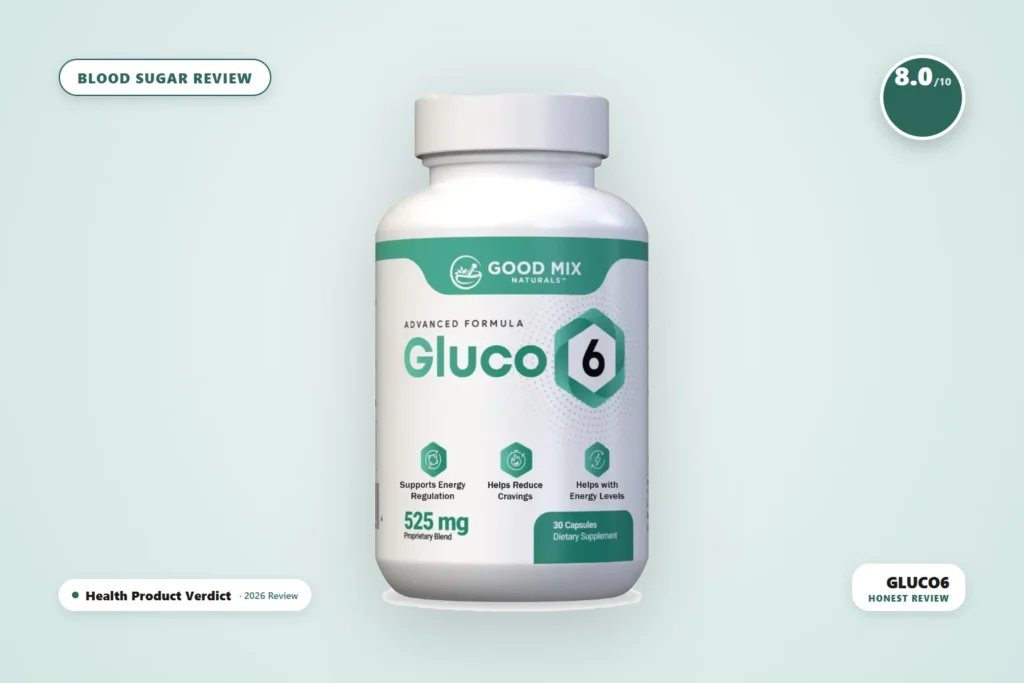
Gluco6
A daily blood sugar support formula built around a mix of plant extracts and minerals, intended to be used alongside diet and activity changes rather than as a replacement for them.
Read our full Gluco6 review for the complete breakdown.
Sugar Defender
Another blood sugar support formula from a different manufacturer, worth comparing against Gluco6 on ingredients and price before deciding between the two.
Read our full Sugar Defender review for the complete breakdown.
FAQ
Is insulin resistance the same as prediabetes?
No. Insulin resistance is when cells respond poorly to insulin, often with blood sugar still in the normal range. Prediabetes is a later, measurable stage where blood sugar itself has already risen above normal on a standard test. Insulin resistance usually comes first.
Can you have insulin resistance with a normal A1C?
Yes, and it’s common. The pancreas can compensate for insulin resistance by producing extra insulin, which keeps A1C and glucose readings normal even while insulin resistance is present underneath. This is a major reason it often goes undetected.
Can you be prediabetic without insulin resistance?
It’s uncommon. Almost everyone with prediabetes has some underlying degree of insulin resistance, since it’s typically the mechanism that drives blood sugar upward in the first place.
Is insulin resistance reversible?
For many people, yes, at least significantly. Weight loss, regular physical activity, improved sleep, and dietary changes are the most consistently supported ways to improve insulin sensitivity, especially when addressed before progression to prediabetes or type 2 diabetes.
What test should I ask my doctor for?
An A1C or fasting glucose test is the standard starting point and is enough to check for prediabetes. Insulin resistance itself isn’t routinely tested for, so if you’re specifically concerned about it, ask your doctor whether a fasting insulin level or additional risk-factor evaluation makes sense for your situation.
Conclusion
Insulin resistance vs prediabetes isn’t a matter of two labels for the same thing. Insulin resistance is the earlier, often silent stage where cells stop responding normally to insulin while blood sugar can still look normal. Prediabetes is the later, measurable stage where blood sugar itself has crossed a specific threshold. Neither one guarantees the other gets worse, and both respond to the same core lifestyle changes, which is exactly why catching either one early is worth taking seriously.
For the full picture on causes, habits, and every blood sugar support product we’ve reviewed, see our Blood Sugar Support: The Complete 2026 Guide.
Related Reading
- Blood Sugar Support: The Complete 2026 Guide
- Blood Sugar Crashing After Meals? Here Is What Might Help
- How to Choose the Best Supplements: A Buyer’s Guide
This article is for informational purposes only and does not constitute medical advice. Consult a healthcare professional for diagnosis and testing related to insulin resistance, prediabetes, or blood sugar concerns.