
Quick answer: Bladder control problems, including sudden urges and occasional leaks, are common in women and usually stem from pelvic floor weakness, hormonal changes, urinary tract imbalances, or a combination of these factors. It is a manageable, treatable concern, not something to just live with quietly. For general support alongside medical guidance, some people look at supplements built around the urogenital microbiome, which we compare below.
What Causes Bladder Control Problems?
According to the National Institute of Diabetes and Digestive and Kidney Diseases (NIDDK), these symptoms, also called urinary incontinence, can result from several factors:
- Weakened pelvic floor muscles, often related to childbirth or aging
- Hormonal changes, particularly during perimenopause and menopause
- Urinary tract infections or imbalances in the urogenital microbiome
- Certain medications and excess caffeine or alcohol intake
- Being overweight, which adds pressure on the bladder
- Nerve damage from conditions like diabetes
The NIDDK notes that urinary incontinence is common but not a normal or unavoidable part of aging, and effective treatments are available once the underlying cause is identified, from pelvic floor exercises to medical procedures depending on severity.
When to See a Doctor
If bladder symptoms are frequent, severe, sudden in onset, or accompanied by pain, blood in the urine, or fever, see a doctor promptly, since these can indicate an infection or other condition requiring specific treatment. Even mild, occasional symptoms are worth mentioning at a regular checkup, since a doctor can point you toward pelvic floor therapy or other proven approaches.
Pelvic Floor Exercises: A Proven First Step
The NIDDK identifies pelvic floor muscle training, commonly known as Kegel exercises, as one of the most well-supported first-line approaches for mild to moderate bladder control problems. These exercises involve repeatedly contracting and relaxing the muscles that support the bladder, and are often recommended before trying medication or other interventions. A doctor or pelvic floor physical therapist can help confirm you are doing them correctly, since many people unknowingly engage the wrong muscles.
Everyday Habits That Support Bladder Health
Alongside pelvic floor exercises and any supplement, a few daily habits are commonly recommended:
- Limiting bladder irritants like caffeine, alcohol, and carbonated beverages, especially close to bedtime
- Maintaining a healthy weight, since excess weight adds pressure on the bladder
- Staying adequately hydrated throughout the day rather than restricting fluids, which can actually irritate the bladder further
- Practicing timed voiding, or going to the bathroom on a set schedule rather than waiting for urgency
Possible Solutions Worth Considering
Alongside medical guidance, some women look at supplements targeting the urogenital microbiome, the bacterial ecosystem of the bladder and vaginal tract, which research increasingly links to bladder control and urinary comfort. We compared two options with overlapping ingredients.
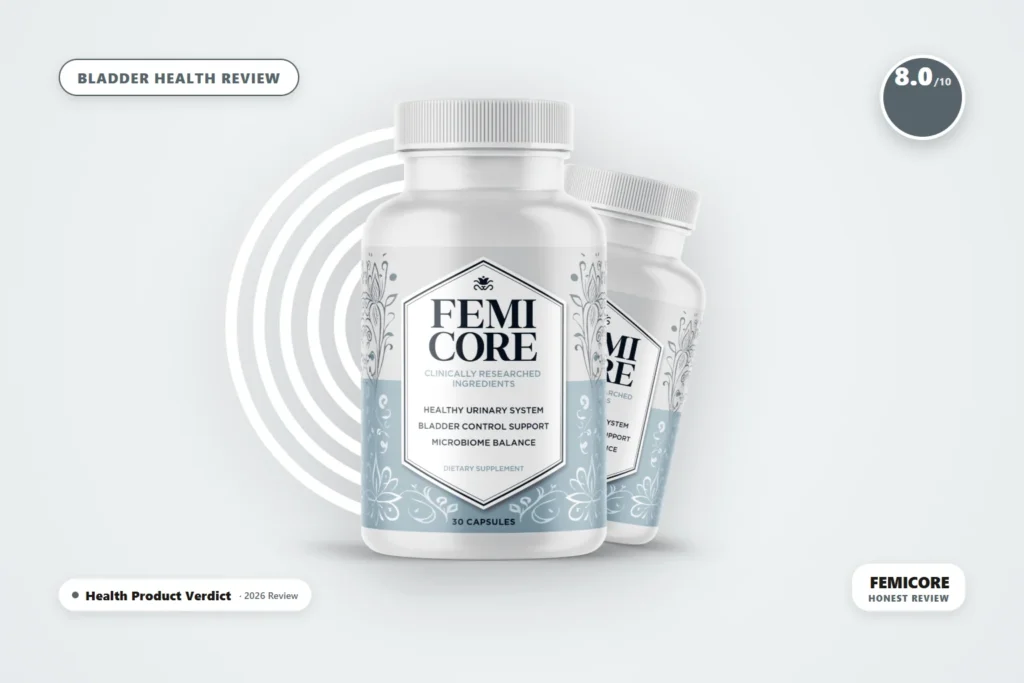
FemiCore
FemiCore combines five specific Lactobacillus probiotic strains with botanical ingredients including cranberry, bearberry, berberine, and mimosa pudica, targeting the urogenital microbiome directly. It is non-GMO, stimulant-free, manufactured to GMP standards, and comes with a 60-day money-back guarantee. Exact ingredient doses are not disclosed.
Read our full FemiCore review for the complete ingredient breakdown and pricing.
Femi Pro
Femi Pro shares several ingredients with FemiCore, including mimosa pudica, bearberry, cranberry extract, and a probiotic blend, though it does not disclose its specific probiotic strains or manufacturer name. It is a simple one-a-day capsule, non-GMO, sold without a subscription, and comes with a 60-day money-back guarantee.
Read our full Femi Pro review for the complete breakdown.
How Do FemiCore and Femi Pro Compare?
Both products share a similar ingredient base (cranberry, bearberry, berberine, mimosa pudica) and the same 60-day guarantee. FemiCore differentiates itself by specifying five named Lactobacillus strains, giving it a slight edge in formulation transparency and a somewhat higher overall score in our review. Femi Pro is a simpler formula from an undisclosed manufacturer, though it covers the same core ingredient categories.
When Hormonal Changes Are Part of the Picture
For some women, bladder symptoms show up alongside other menopause-related changes rather than in isolation. In that case, a formula aimed at hormonal balance more broadly, rather than the bladder specifically, may be worth a look as a complementary option.
Menovelle
Menovelle takes a different approach than FemiCore and Femi Pro. Instead of targeting the urogenital microbiome directly, it is a ten-ingredient blend built almost entirely around medicinal mushrooms (including reishi, cordyceps, and lion’s mane), marketed for general menopause and hormonal balance support. Individual ingredient doses are not disclosed, and the official site does not cite a specific mechanism tying any single ingredient to bladder or hormonal symptoms. It is non-GMO and comes with a money-back guarantee.
Read our full Menovelle review for the complete ingredient breakdown.
FAQ
Is bladder leakage a normal part of aging?
No. While common, especially after childbirth or during menopause, urinary incontinence is not considered an unavoidable part of aging, and effective treatments exist once the cause is identified.
Can supplements cure incontinence?
No. Dietary supplements are not intended to diagnose, treat, cure, or prevent incontinence or any other condition. They are marketed as general support, not medical treatment.
What is the urogenital microbiome?
The urogenital microbiome refers to the community of bacteria living in the urinary and vaginal tract. An imbalance in this microbiome is increasingly linked to bladder urgency, leaks, and recurring urinary tract infections.
What is the difference between FemiCore and Femi Pro?
Both share a similar ingredient base, but FemiCore specifies five named Lactobacillus probiotic strains, while Femi Pro does not disclose its specific strains or manufacturer name, making FemiCore somewhat more transparent.
When should I see a doctor about bladder control?
See a doctor if symptoms are frequent, severe, sudden, or accompanied by pain, blood in the urine, or fever. Even mild symptoms are worth discussing at a regular checkup, since effective treatments are available.
Do Kegel exercises actually work?
Yes. The NIDDK identifies pelvic floor muscle training as one of the most well-supported first-line approaches for mild to moderate bladder control problems, often recommended before medication or other interventions.
Should I drink less water if I have bladder leaks?
No. Restricting fluids can actually irritate the bladder further and lead to concentrated urine, which is itself irritating. Staying adequately hydrated while limiting known bladder irritants like caffeine and alcohol is the better approach.
Related Reading
- How to Stop an Overactive Bladder Naturally
- Bladder Leaks and Urgency: The Exercises and Supplements Worth Trying
- FemiCore Review
- FemiPro Review
Conclusion
These symptoms are common, treatable, and not something to manage quietly without support. If you have discussed your symptoms with a doctor and are looking for additional support, FemiCore and Femi Pro both target the urogenital microbiome with overlapping but distinct formulas worth comparing.
For a full breakdown of causes, habits, and how the supplements in this space compare, see our Bladder Control Supplements: The Complete Guide.
This article is for informational purposes only and is not intended as medical advice. If you are experiencing bladder control problems, consult a physician for proper evaluation and treatment before trying any supplement.