
Sudden urges, frequent bathroom trips, or leaks when you laugh or sneeze, bladder control problems are extremely common and rarely talked about, which is why so many people quietly look into bladder control supplements. This guide gives you an honest answer: what these problems really are, why they happen, the exercises and habits that help most, when to see a doctor, and how the bladder-support products we have reviewed compare, along with a frank take on where supplements fit.
Quick answer: bladder control problems (urinary incontinence) are common and usually treatable, not something you simply have to live with. The strongest evidence is for pelvic-floor exercises, bladder training, and medical treatment. Supplements do not cure incontinence, but a few researched ingredients may offer modest, supportive help alongside those proven basics, which is exactly how this guide frames them.
- What Is Urinary Incontinence?
- Common Signs
- When to See a Doctor
- Common Myths About Bladder Supplements
- Exercises and Habits That Help Most
- Do Bladder Control Supplements Actually Work?
- Ingredients Worth Knowing
- How We Evaluate These Products
- Comparing Every Product We’ve Reviewed
- How to Choose the Right One
- FAQ
What Is Urinary Incontinence?
Urinary incontinence means leaking urine or losing bladder control, and it comes in a few main types. Stress incontinence is leaking with pressure, coughing, laughing, sneezing, lifting, or exercise. Urge incontinence (also called overactive bladder) is a sudden, intense need to go, sometimes with leaks before you reach the toilet. Many people have a mix of both. According to the National Institute of Diabetes and Digestive and Kidney Diseases (NIDDK), bladder control problems are common and treatable, with several types and causes, so identifying the type helps determine the most effective approach.
Common contributors include weakened pelvic-floor muscles (often after pregnancy, childbirth, or with age), menopause and hormonal changes, prostate issues in men, urinary tract infections, certain medications, and carrying extra weight. Because the type and cause guide the best treatment, a proper assessment matters more than reaching straight for a product, and it is the honest starting point for anyone considering a bladder control supplement.
Common Signs
Bladder control problems show up in familiar patterns:
- Leaking with pressure, when you cough, sneeze, laugh, lift, or exercise (stress incontinence).
- Sudden, strong urges to urinate that are hard to defer (urge incontinence).
- Frequent urination, including waking at night to go (nocturia).
- Not making it to the bathroom in time, or leaking on the way.
- A feeling of incomplete emptying, or needing to go again soon after.
- Planning your day around bathroom access, which is a sign it is worth addressing rather than tolerating.
Knowing whether your leaks come mainly with pressure or with urgency is one of the most useful things you can tell a doctor, because the two types respond to different treatments.
When to See a Doctor
Bladder control problems are common, but they are not something you have to just accept, and several symptoms warrant a doctor rather than a supplement: any new or worsening leakage, urgency or frequency that disrupts your life or sleep, pain or burning when you urinate, blood in the urine, or a fever with urinary symptoms, which can signal an infection.
A doctor can identify the type of incontinence and offer treatments, from pelvic-floor therapy to medications, that are far more effective than any over-the-counter product. Seeing them first also means that if you do choose to try a supplement, you are adding it to a real plan rather than using it to avoid one.
Common Myths About Bladder Supplements
Myth: “A supplement can cure incontinence.” No supplement cures bladder control problems. Pelvic-floor exercises, behavioral strategies, and medical treatments have the real evidence; supplements can, at most, offer modest support alongside them.
Myth: “Leaking is just a normal part of aging you must accept.” It becomes more common with age, but it is treatable at any age, and quietly living with it is not the only option.
Myth: “Cutting back on fluids will fix urgency.” Drinking too little concentrates urine and can actually irritate the bladder, making urgency worse. Sensible hydration, not dehydration, is the goal.
Myth: “A supplement can replace pelvic-floor exercises.” It cannot. The exercises are the proven core of treatment; a supplement is at best an optional add-on, never a substitute.
Exercises and Habits That Help Most
The measures with the strongest evidence for bladder control are practical, free, and worth doing before or alongside any product:
- Do pelvic-floor (Kegel) exercises, which have strong evidence for stress and mixed incontinence when done consistently over time.
- Try bladder training, gradually extending the time between bathroom trips to calm an overactive bladder.
- Watch bladder irritants like caffeine, alcohol, and carbonated or acidic drinks, which can trigger urgency.
- Maintain a healthy weight, since extra weight increases pressure on the bladder.
- Stay sensibly hydrated rather than drastically cutting fluids, which backfires by irritating the bladder.
- Keep a bladder diary for a few days to spot your personal triggers and patterns.
Pelvic-floor exercises in particular are the foundation, often more effective than any pill, and a pelvic-health physiotherapist can make sure you are doing them correctly. With those basics in place, a supplement becomes a small, optional extra rather than a hoped-for cure, which is the right way to think about the products below.
Do Bladder Control Supplements Actually Work?
With the proven basics established, where do supplements fit? Most bladder control supplements use botanicals and nutrients aimed at bladder-muscle function, urinary comfort, or, for men, prostate health. Common ingredients include pumpkin seed extract, soy or plant compounds, and cranberry, some of which have small studies for urgency and frequency.
So do they work? The honest answer is “modestly, at best, and as a supporting player.” These products may take a little edge off urgency or frequency for some people, but the finished formulas are rarely tested as a whole, and none rivals pelvic-floor training or medical treatment. That is not a contradiction with the earlier sections, it is the consistent message of this guide: exercises and medical care do the heavy lifting, and a supplement is an optional extra layered on top.
Framed that way, a bladder supplement can be a reasonable experiment if you have realistic expectations and use it alongside the basics. Dose transparency matters here too: a product that discloses a researched ingredient like pumpkin seed extract at a sensible amount is worth more than a vague blend promising to end your leaks.
Ingredients Worth Knowing
studied in small trials for overactive bladder and urinary frequency, one of the more researched bladder botanicals.
plant compounds sometimes paired with pumpkin seed in bladder formulas, with limited supporting research.
best known for urinary-tract health rather than incontinence itself, but common in this category.
aimed at prostate-related urinary symptoms rather than female incontinence.
included in some blends for muscle and urinary support, with modest evidence.
Even the better-supported ingredients here offer support rather than a fix. A short, disclosed formula built around something like pumpkin seed extract is a smarter buy than a long blend making big promises, and it should always sit alongside pelvic-floor work, not replace it.
Types of Incontinence Explained
Because the right treatment depends entirely on the type of incontinence, it is worth understanding the main ones. Stress incontinence is leaking when pressure rises in the abdomen, with a cough, sneeze, laugh, lift, or jump, and it usually reflects a weakened pelvic floor or, in some cases, changes after childbirth or menopause. It responds especially well to pelvic-floor exercises.
Urge incontinence, part of overactive bladder, is a sudden, hard-to-defer need to urinate, sometimes with leakage before you reach the toilet, and it reflects an over-eager bladder muscle rather than a weak floor. Bladder training and, when needed, medication are the mainstays. Many people have mixed incontinence, a combination of both, while overflow incontinence (frequent dribbling from a bladder that never fully empties) is less common and needs specific medical evaluation.
This is why a single “bladder control supplement” marketed for everyone is an awkward fit: the product cannot know which type you have, and the types call for different first-line treatments. Knowing your type, ideally with a doctor’s input, tells you where a supplement might sit as an optional extra and where your effort is far better spent on exercises or medical care.
Why Pelvic-Floor Training Comes First
Across the incontinence guidance, one recommendation appears again and again as a first-line treatment: pelvic-floor muscle training. The reason is simple, it works, with a solid body of evidence behind it for stress and mixed incontinence, and it addresses the mechanics of the problem rather than just the symptoms. Done consistently, it can meaningfully reduce leaks, and it has no downside beyond the effort involved.
The catch is that many people do the exercises incorrectly, squeezing the wrong muscles, holding their breath, or giving up before the weeks it takes to see results. This is where a pelvic-health physiotherapist is genuinely valuable, making sure you are training the right muscles and progressing sensibly. Set against that, a supplement is a modest optional extra: it may take a little edge off urgency for some people, but it cannot rebuild the pelvic floor. Framing it that way, exercises first, supplement as a possible add-on, keeps expectations honest and your money well spent.
Menopause and Bladder Changes
For many women, bladder symptoms become more noticeable around menopause, and understanding why helps make sense of the timing. Declining estrogen affects the tissues of the bladder, urethra, and pelvic floor, which can thin and lose some of their supportive strength. This is part of why stress incontinence and urgency often appear or worsen during and after the menopause transition, even in women who had no bladder issues earlier in life.
The good news is that this is a well-recognized, treatable pattern. Pelvic-floor exercises remain the first-line approach and are just as effective in this group. For some women, local (vaginal) estrogen therapy, prescribed by a doctor, can meaningfully improve tissue quality and symptoms, an option worth discussing directly rather than assuming a supplement is the only path. Lifestyle steps, healthy weight, limiting bladder irritants, and staying active, continue to matter as much as ever.
If bladder symptoms arrive alongside other menopause changes, hot flashes, sleep disruption, mood shifts, it is worth mentioning all of it to your doctor together, since menopause care often addresses several of these at once more effectively than treating the bladder in isolation.
Bladder Control in Men and the Prostate Connection
Bladder control problems in men most often trace back to the prostate rather than the pelvic floor issues more common in women. As the prostate gland enlarges with age, a very common condition called benign prostatic hyperplasia (BPH), it can press on the urethra and irritate the bladder, producing urgency, frequent urination, a weak stream, and incomplete emptying, symptoms that overlap with, but are mechanically different from, female incontinence.
Because the cause is structural, prostate-focused treatments, lifestyle adjustments, medications that relax the prostate or shrink it, and in some cases procedures, tend to be the effective path, alongside the same general bladder-friendly habits (moderating fluids before bed, limiting bladder irritants) that help everyone. Ingredients like saw palmetto appear frequently in men’s bladder formulas for this reason, with modest supporting research for BPH symptoms specifically.
Any new urinary symptoms in men, especially sudden inability to urinate, blood in the urine, or pain, warrant prompt medical evaluation, since these can occasionally signal something more serious than routine BPH. As with women, a supplement here is a possible supporting player at most, never a substitute for identifying and addressing the prostate as the underlying cause.
How We Evaluate These Products
Every bladder-support supplement we review is scored on the same five factors, so the comparison below is consistent: ingredient quality, scientific evidence, value for money (price and guarantee), customer feedback, and manufacturer trust (dose transparency and honest marketing). We read the real sales page and label for each product and never invent ingredients, studies, or results, and any product implying it can replace proven treatment is marked down.
Comparing Every Product We’ve Reviewed
Here is how the bladder-support products we have reviewed compare. Click any name for the full, detailed review.
| Product | Score | Format | Best For | Guarantee |
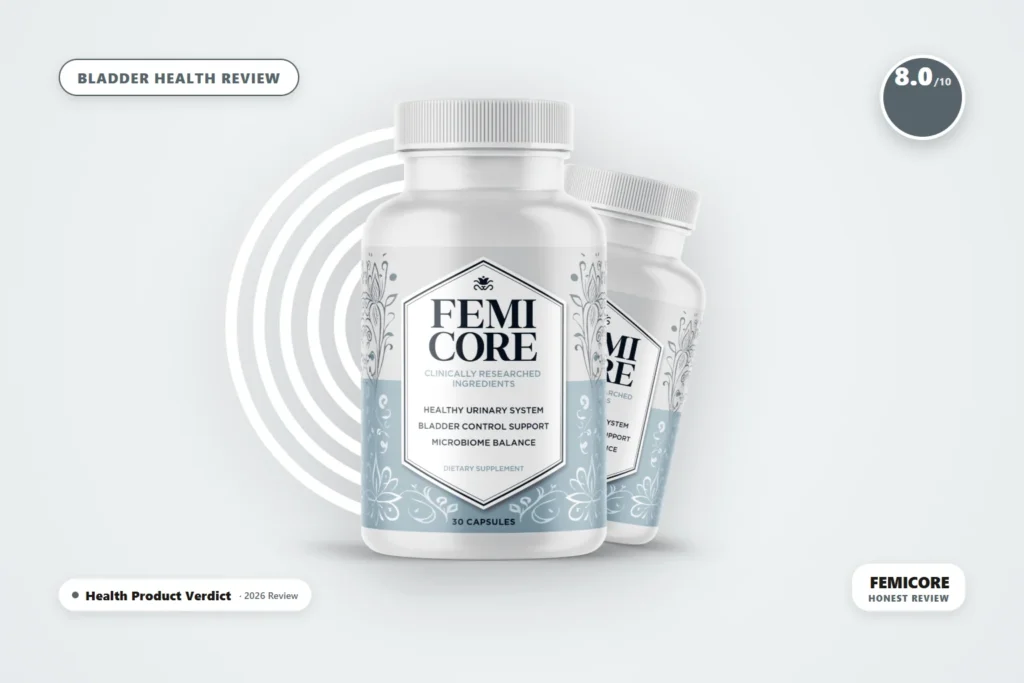
| FemiCore | 8.0/10 | Capsule | Women wanting the highest-scoring bladder-support option | 60-Day |
| FemiPro | 7.6/10 | Capsule | Women wanting an alternative bladder-and-urinary support blend | 60-Day |
FemiCore edges ahead on a more transparent formula, and both carry a 60-day guarantee. As above, treat either as support alongside pelvic-floor exercises, not a replacement for them.
How to Choose the Right One
Start with the proven basics: pelvic-floor exercises and bladder training help most people and cost nothing, and a doctor can identify your type of incontinence. Those steps come first, whether or not you ever buy a product.
If you then want to add a supplement, look for one with a researched ingredient like pumpkin seed extract at a disclosed dose, a clear label rather than a vague blend, and a money-back guarantee so you can test your response with low risk. Keep expectations modest and consistent with everything above: the best bladder control supplements are supportive extras, and the higher-scoring option here simply pairs a cleaner formula with a fair guarantee.
FAQ
Can a supplement cure bladder leaks?
No. No supplement cures incontinence. Pelvic-floor exercises, bladder training, and medical treatments have the strongest evidence; supplements may offer modest support at best.
Which ingredient has the best bladder evidence?
Pumpkin seed extract has some of the more direct research for overactive bladder and urinary frequency, though studies are small.
Do Kegel exercises really help?
Yes. Pelvic-floor (Kegel) exercises have strong evidence for stress and mixed incontinence when done consistently over time, and they are the foundation of treatment.
Should I drink less to reduce leaks?
No. Drinking too little concentrates urine and can irritate the bladder, worsening urgency. Sensible hydration is better than cutting back.
When should I see a doctor?
For any new or worsening leakage, pain or burning, blood in the urine, or symptoms that disrupt your life or sleep. A doctor can identify the type and best treatment.
Is incontinence just part of aging?
It becomes more common with age but is treatable at any age. It is not something you simply have to live with.
Related Reading
- How to Stop an Overactive Bladder Naturally
- How to Choose the Best Supplements: A Buyer’s Guide
- Bladder Control Problems: Causes and What Helps
- FemiCore Review
- FemiPro Review
Health Product Verdict provides independent analysis and reviews of health-related products. Our content is for informational purposes only and does not constitute medical advice. Bladder control problems are common and treatable, so always consult a qualified healthcare professional for assessment and treatment.