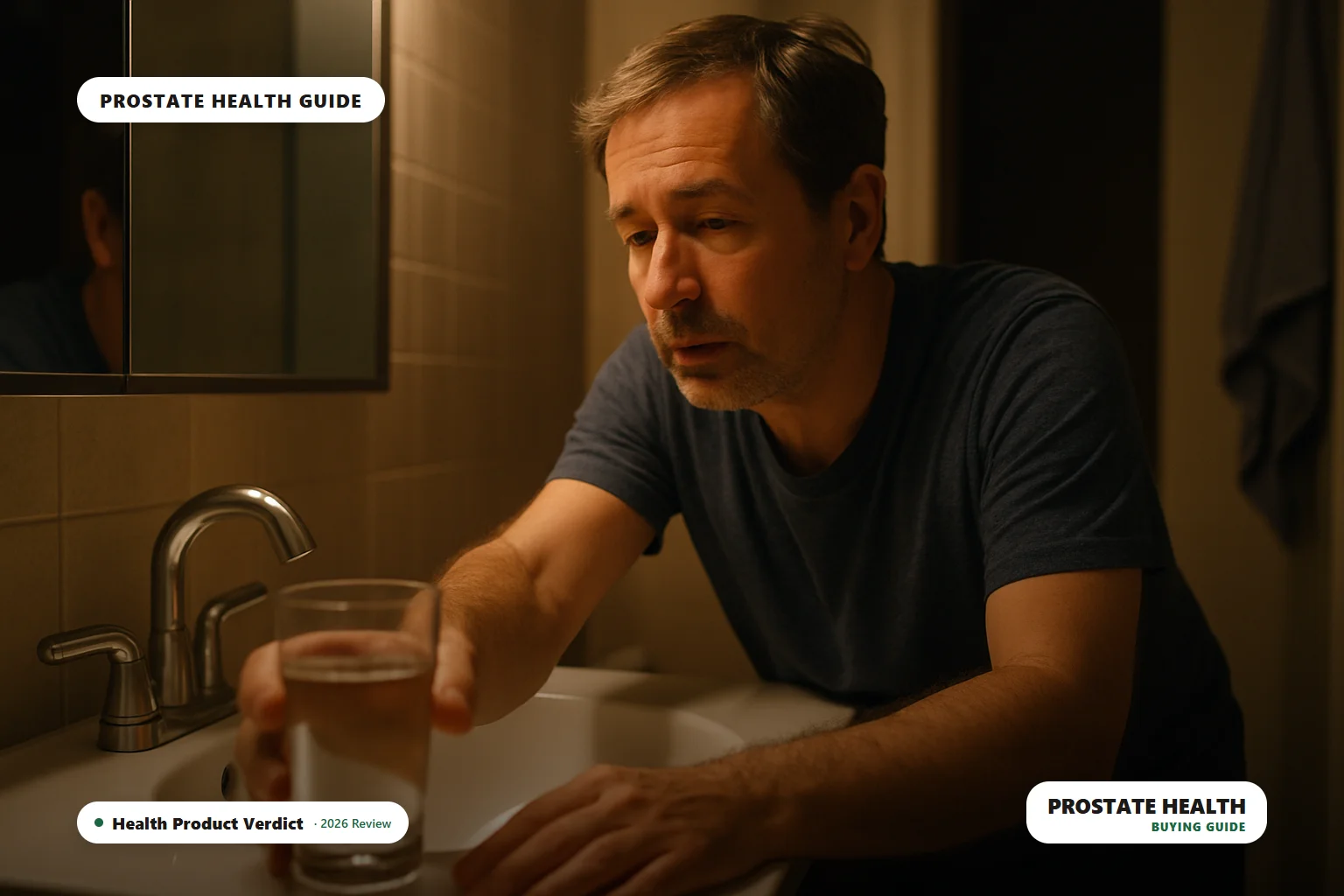
Quick answer: Supporting prostate health naturally starts with understanding prostate changes, one of the most common parts of aging for men, usually showing up as a weaker urine stream, more frequent nighttime bathroom trips, or a feeling of incomplete bladder emptying. There is no single fix, but a mix of lifestyle habits and, for some men, a supplement built around researched ingredients like saw palmetto can help support day-to-day comfort. This guide breaks down the real causes and a few supplement options worth knowing about, without pushing any single product.
Supporting Prostate Health Naturally: What’s Behind the Changes?
The prostate is a small gland that sits below the bladder, and it tends to grow larger as men age. According to the National Institute of Diabetes and Digestive and Kidney Diseases (NIDDK), benign prostatic hyperplasia (BPH), a non-cancerous enlargement of the prostate, affects roughly half of men between ages 51 and 60, and up to 90% of men over 80.
BPH itself isn’t dangerous, but the enlarged gland can press on the urethra, which is what leads to the urinary symptoms most men notice first.
Main Causes
Prostate enlargement is primarily linked to age and hormonal changes, particularly shifts in testosterone and estrogen balance that happen over time. Family history also plays a role, and men with a father or brother who had prostate issues are more likely to experience them too.
Diet and lifestyle factors like being overweight, low physical activity, and diets low in vegetables have also been associated with a higher risk of BPH symptoms, though they aren’t the sole cause.
Common Symptoms
The most commonly reported symptoms include:
- A weaker or interrupted urine stream
- Needing to urinate more frequently, especially at night
- A feeling that the bladder hasn’t fully emptied
- A sudden, urgent need to urinate
If symptoms are severe, sudden, or include blood in the urine or pain, see a doctor rather than relying on supplements or lifestyle changes alone.
Possible Solutions Worth Considering
Beyond talking to a doctor about persistent symptoms, some men look at daily supplements built around ingredients with a history of prostate-support research, like saw palmetto. Below are four formulas we’ve reviewed in depth, each with a different format and ingredient approach. None of these are a substitute for medical care if you have a diagnosed condition.
Prosta Peak
Prosta Peak is a capsule supplement built around a handful of named ingredients with real prostate-support research history, including saw palmetto, pygeum, and cat’s claw. It’s backed by a 180-day money-back guarantee, one of the longer windows in this category.
Read our full Prosta Peak review for ingredients, pricing, and side effects.
ProstaVive
ProstaVive takes a powder approach, mixing into water or coffee, with ingredients like boron, tongkat ali, ashwagandha, and panax ginseng. Several of these have separate research behind them for men’s health and hormone support, though ProstaVive doesn’t disclose individual ingredient doses. It also comes with a 180-day money-back guarantee.
Read our full ProstaVive review for ingredients, pricing, and side effects.
Prostadine
Prostadine uses a liquid dropper format built around saw palmetto plus several seaweed-derived ingredients like kelp and bladderwrack. Its sales page leans on a hard-water marketing narrative that isn’t a medically recognized cause of prostate issues, so it’s worth judging this one on the ingredients rather than the story. It carries a 60-day money-back guarantee.
Read our full Prostadine review for ingredients, pricing, and side effects.
Protoflow
Protoflow is a capsule formula that names all eight of its ingredients, including saw palmetto, one of the better-researched prostate herbs, alongside several traditional libido herbs like muira puama and damiana that have more limited prostate-specific research. It comes with a 60-day money-back guarantee, though individual ingredient doses aren’t disclosed.
Read our full Protoflow review for ingredients, pricing, and side effects.
Which of these makes sense depends on your preferred format (capsule, powder, or dropper), your budget, and how much weight you put on ingredient transparency versus marketing claims. None of the four is a medical treatment, and all are best paired with the lifestyle habits covered above.
FAQ
What foods are bad for prostate health?
Diets high in red meat, processed foods, and excess dairy have been associated with a higher risk of prostate issues in some studies, while diets rich in vegetables, especially cruciferous ones like broccoli, are generally linked to better outcomes.
Can prostate supplements really shrink an enlarged prostate?
Most over-the-counter supplements are not clinically proven to shrink the prostate. Some ingredients, like saw palmetto, have research suggesting they may help ease symptoms for some men, but results vary and supplements are not a substitute for medical treatment.
At what age should men start thinking about prostate health?
Doctors generally recommend men start paying attention to prostate health, including regular checkups, starting around age 40 to 45, since BPH prevalence increases significantly after age 50.
Does exercise help with prostate symptoms?
Regular physical activity is associated with a lower risk of BPH symptoms in several studies, likely because it helps manage weight and hormone balance, both of which play a role in prostate health.
When should I see a doctor instead of trying a supplement?
See a doctor if you notice blood in your urine, pain while urinating, sudden inability to urinate, or symptoms that worsen quickly. These can signal something beyond typical age-related prostate changes.
Related Reading
Conclusion
Supporting prostate health naturally starts with understanding prostate changes, a near-universal part of aging for men, and there’s no single fix that works for everyone. A combination of diet, exercise, and, for some men, a well-formulated supplement can help support day-to-day comfort. If you’re considering a supplement, look at the ingredients and guarantee terms rather than the marketing story, and talk to a doctor if symptoms are severe or sudden.
Health Product Verdict provides independent analysis and reviews of health-related products. Our content is for informational purposes only and does not constitute medical advice. Always consult a qualified healthcare professional before starting any supplement or health program.