
If you keep walking into rooms and forgetting why, losing words mid-sentence, or feeling like your thinking is wrapped in cotton wool, you have probably wondered whether brain fog supplements can clear the haze. This guide gives you an honest answer: what brain fog and everyday forgetfulness really are, why they happen, the habits that sharpen memory more than any pill, when to see a doctor, and how the brain supplements we have reviewed actually compare.
Quick answer: occasional forgetfulness and brain fog are usually driven by very ordinary things, poor sleep, stress, dehydration, low mood, certain medications, or nutrient gaps, not early dementia. No supplement is proven to prevent cognitive decline. A few well-researched nutrients may offer modest support, but sleep, exercise, and stress management do far more for your memory than any capsule.
What Is Brain Fog?
“Brain fog” is not a medical diagnosis. It is an everyday term for a cluster of symptoms: mental fatigue, slower thinking, trouble concentrating, and mild forgetfulness. According to the National Institute on Aging (NIA), some memory change is a normal part of aging, and many everyday factors can affect memory and focus that have nothing to do with a serious condition.
The most common culprits behind brain fog are surprisingly mundane. Not enough sleep is near the top of the list, because memory is consolidated overnight and a tired brain simply does not encode or retrieve information as well. Chronic stress and anxiety flood the body with cortisol, which impairs concentration. Dehydration, skipped meals, and blood-sugar swings starve the brain of steady fuel. And a long list of common medications, from antihistamines to some blood-pressure and sleep drugs, list mental fog as a side effect.
Hormonal shifts also play a real role. Many women describe noticeable “menopause brain fog” as estrogen declines, and thyroid problems, low vitamin B12, and low mood can all dull thinking. Because so many of these causes are reversible, the most useful mindset is to look honestly at your sleep, stress, health, and medications first, and treat a supplement as a small, optional support rather than the main fix.
It also helps to separate two different worries. Everyday brain fog, the fuzzy, off-day feeling most people get, is common and usually harmless. Progressive memory loss that disrupts daily life is a different matter and deserves medical attention. Confusing the two is what drives a lot of unnecessary anxiety, and a lot of unnecessary supplement spending.
Common Signs of Memory Changes
Most everyday memory complaints fall into a few familiar patterns, and recognizing them can be reassuring, since these are the kinds of lapses almost everyone has:
- Tip-of-the-tongue moments, where a familiar word or name briefly will not come.
- Walking into a room and forgetting why, which is usually a sign of divided attention rather than memory loss.
- Trouble concentrating or feeling mentally “slow,” especially when tired, stressed, or bored.
- Misplacing everyday items like keys or a phone, then retracing your steps to find them.
- Needing more reminders or lists than you used to, which is common and easily managed.
- Reading a page and realizing you took nothing in, a classic sign of attention overload rather than a failing memory.
The reassuring thread here is that these lapses are about attention and retrieval, not about losing information permanently. They tend to worsen when you are stretched thin and ease when you are rested and focused, which is exactly why the habits section below matters so much.
When to See a Doctor
Occasional forgetfulness and fog are normal, especially when you are tired or stressed. But some patterns deserve a doctor’s evaluation rather than a supplement: memory problems that interfere with daily life or work, getting lost in familiar places, repeatedly asking the same questions, noticeable changes in personality or judgment, or forgetfulness that friends and family are commenting on before you are.
A sudden change in memory or thinking is also worth prompt attention, as is confusion that comes on quickly. These are not the slow, everyday lapses of a busy mind, and they should be checked.
A doctor can look for treatable contributors, thyroid problems, a vitamin B12 deficiency, medication side effects, depression, sleep apnea, before you assume the cause is age or reach for a memory pill. In many people, fixing one of those does more for mental clarity than any brain fog supplement on the market, and it is the step most often skipped.
Common Myths About Brain Supplements
Myth: “Brain supplements prevent dementia.” No supplement is proven to prevent Alzheimer’s or dementia. Marketing that implies otherwise is going well beyond the evidence, and it preys on a very understandable fear.
Myth: “A ’10-in-1′ formula is better than a focused one.” Stacking many ingredients often means each is under-dosed. A few well-studied ingredients at real doses usually beats a long, thin blend built to look impressive on the label.
Myth: “If I feel sharper within an hour, it is working long-term.” Many formulas include caffeine or other stimulants that create a short-term lift unrelated to any lasting memory benefit. A quick buzz is not the same as cognitive support, and it can even disrupt the sleep your memory depends on.
Myth: “Natural nootropics have no downsides.” Ginkgo can interact with blood thinners, high-dose stimulants can affect blood pressure and sleep, and some “focus” blends are simply undisclosed caffeine. Natural does not mean consequence-free.
Habits That Sharpen Memory
The strongest evidence for protecting memory points to lifestyle, not bottles. These are the foundations worth getting right before, or alongside, any supplement:
- Prioritize sleep. Memory consolidation happens during sleep, and poor sleep is one of the single biggest drivers of brain fog. This is the highest-leverage habit of all.
- Exercise regularly. Physical activity has some of the best evidence for supporting brain health, mood, and focus, partly by improving blood flow to the brain.
- Manage stress, which directly impairs concentration and recall; even short daily breathing or walking breaks help.
- Stay socially and mentally active, with conversation, reading, puzzles, and learning new skills that challenge the brain.
- Eat a balanced diet with enough B12 and omega-3s, keep blood sugar steady, and stay hydrated, since even mild dehydration dulls thinking.
- Do one thing at a time. Much of what feels like memory failure is really attention overload from constant multitasking.
None of these come in a capsule, which is exactly why they are so easy to skip in favor of a quick fix. But layered together, they are the closest thing to a proven “memory supplement” there is. A product taken on top of solid sleep, movement, and stress control is a reasonable experiment; a product used to paper over chronic exhaustion rarely delivers.
Do Brain Fog Supplements Actually Work?
Most brain fog supplements take one of a few approaches. Some supply nutrients the brain uses, like B vitamins or omega-3s, which help most when you are genuinely lacking them. Others use nootropic botanicals such as bacopa or ginkgo, studied for modest effects on memory or blood flow. A third group leans on stimulants or adaptogens aimed at focus and mental energy rather than long-term memory.
So do they work? Modestly, and with big caveats. A handful of individual ingredients have research showing small improvements, usually in specific groups or over months of use. But as with most supplement categories, the evidence typically exists for one ingredient at a particular dose, not for the finished multi-ingredient product. No brain fog supplement is proven to prevent cognitive decline, and dramatic before-and-after claims are a red flag.
That is why dose transparency and a short, evidence-backed ingredient list matter more than a long label or a dramatic name. If a product hides its amounts inside a proprietary blend, you cannot tell whether the useful ingredients are present at meaningful levels. When you compare brain fog supplements, treat a focused, disclosed formula as a far better sign than a sprawling one, and keep expectations grounded: mild support is a realistic goal, a sharper memory overnight is not.
Ingredients Worth Knowing
When you compare brain and memory products, these are the ingredients with the most credible research behind them:
an Ayurvedic herb with some of the better research for memory, though its effects tend to build slowly over several weeks to months rather than overnight.
a structural fat the brain relies on, most useful for people with low dietary intake of oily fish.
studied for circulation and memory with mixed results; a long-standing ingredient rather than a proven fix, and one that interacts with blood thinners.
compounds involved in brain-cell membranes and signaling, researched for attention and memory support.
a medicinal mushroom explored for nerve and cognitive support, plus B vitamins that matter most when you are actually deficient.
Notice how many of these work gradually and depend on your starting point. B vitamins and omega-3s mostly help if you were low to begin with, and bacopa needs patience. A formula built around a few of these, at disclosed doses, is almost always a smarter buy than one dazzling you with a dozen unnamed extracts and a promise of instant clarity.
Normal Aging Memory vs. Something More
One of the most common worries people bring to a memory supplement search is whether their forgetfulness is “just aging” or something more serious, and there are useful distinctions to lean on. Normal age-related memory change tends to be about speed and retrieval, taking a bit longer to recall a name, needing a list you did not used to need, occasionally losing your train of thought. Crucially, the information is still there; it just takes more effort or a cue to bring it back, and people usually remain fully aware of and slightly annoyed by these lapses.
Patterns that are more concerning tend to involve losing information altogether rather than struggling to retrieve it: forgetting an entire recent conversation rather than a detail from it, repeating the same question minutes after being answered, or getting lost in a familiar, well-known place. Difficulty with everyday tasks that used to be routine, managing finances, following a familiar recipe, using appliances, is another meaningful signal, especially when family members notice it before the person does.
This is not a substitute for a proper evaluation, but it is a useful lens for deciding whether to simply improve your sleep and habits or to book an appointment. If your lapses feel like “I know it, I just can’t grab it right now,” that leans toward normal, manageable forgetfulness. If they feel like information has genuinely vanished, or others are raising concerns, that is worth discussing with a doctor rather than working around with a supplement.
How We Evaluate These Products
Every brain supplement we review is scored on the same five factors, so the comparison below is consistent and fair: ingredient quality, scientific evidence, value for money (price and guarantee), customer feedback, and manufacturer trust (dose transparency and how honest the marketing is).
We read the real sales page and label for each product and never invent ingredients, studies, or results. When a company hides its doses or implies its formula can prevent dementia, that shows up in the score. The point is to tell you honestly where a product offers genuine, modest support and where it is mostly hopeful marketing.
Comparing Every Product We’ve Reviewed
Here is how the brain and memory products we have reviewed compare, from highest to lowest overall score. Click any name for the full, detailed review.
| Product | Score | Format | Best For | Guarantee |
| Phytomem One | 7.5/10 | Tablet | Those wanting a broad, multi-ingredient brain and memory formula | 60-Day |
| NeuroPrime | 7.4/10 | Liquid drops | Those who prefer liquid drops and value a very long guarantee | 365-Day |
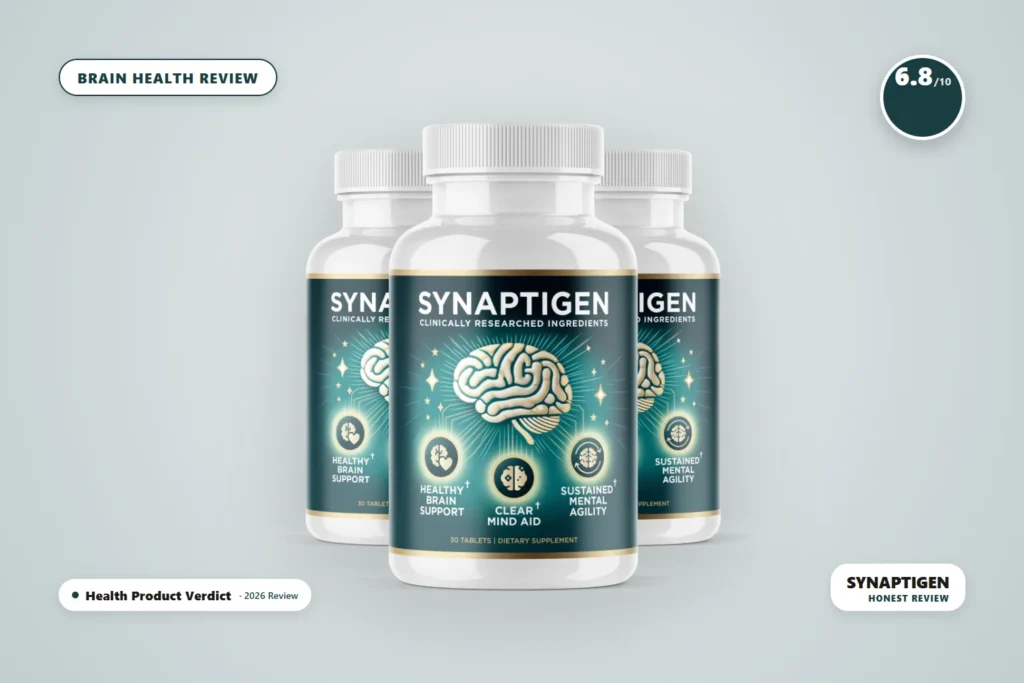
| Synaptigen | 6.8/10 | Melt-in-mouth tablet | Those wanting an easy, no-water melt format | 180-Day |
The three are close on score and differ mainly in format and guarantee. NeuroPrime stands out for an unusually long 365-day guarantee, while Phytomem One edges ahead on formula. None is a shortcut to a sharper memory, but they are the more transparent options we have looked at.
How to Choose the Right One
Start by ruling out the obvious: are you sleeping enough, managing stress, and eating well? Those fix more brain fog than any supplement, and they cost nothing. If persistent fog continues, a doctor can check for treatable causes like low B12 or thyroid problems before you spend money.
If you still want to try a product, favor one that discloses its key ingredient doses, includes a few evidence-backed ingredients rather than a giant blend, and offers a longer money-back guarantee so you can test your own response with low risk. Set realistic expectations, memory ingredients like bacopa work gradually, and steer clear of anything promising to prevent dementia or deliver overnight clarity. The higher-scoring brain fog supplements above earn their spots through more honest formulas and longer guarantees, which is exactly the combination worth paying for.
FAQ
Do brain supplements really improve memory?
Effects are modest at best. A few ingredients have research for small improvements, but no supplement reliably transforms memory, and none is proven to prevent cognitive decline.
Is brain fog a sign of dementia?
Usually not. Brain fog is most often caused by sleep, stress, mood, or nutrient issues. Memory changes that disrupt daily life, however, should be evaluated by a doctor.
Which ingredient has the best evidence?
Bacopa monnieri has some of the more consistent research for memory, though it works slowly. Omega-3s and B vitamins help most when your diet is lacking them.
How long until a brain fog supplement might help?
Ingredients like bacopa often take several weeks to a few months of daily use. A longer guarantee gives you a fair window to judge your own results.
Do these supplements contain stimulants?
Some do. Caffeine or other stimulants can create a short-term focus boost that feels like a benefit but is not the same as lasting cognitive support. Check the label if you are sensitive.
Can lifestyle really beat a supplement for memory?
Yes. Sleep, exercise, stress management, and a balanced diet have far stronger evidence for supporting memory than any supplement on the market.
Are brain supplements safe with my medications?
Some ingredients, like ginkgo, can interact with blood thinners, and stimulants can affect blood pressure. Check with your doctor or pharmacist before starting if you take medication.
Related Reading
- How to Choose the Best Supplements: A Buyer’s Guide
- Memory and Brain Fog: When It’s Normal and When to Worry
- Phytomem One Review
- NeuroPrime Review
- Synaptigen Review
Health Product Verdict provides independent analysis and reviews of health-related products. Our content is for informational purposes only and does not constitute medical advice. Memory changes that disrupt daily life can have treatable causes, so always consult a qualified healthcare professional for diagnosis and guidance.