
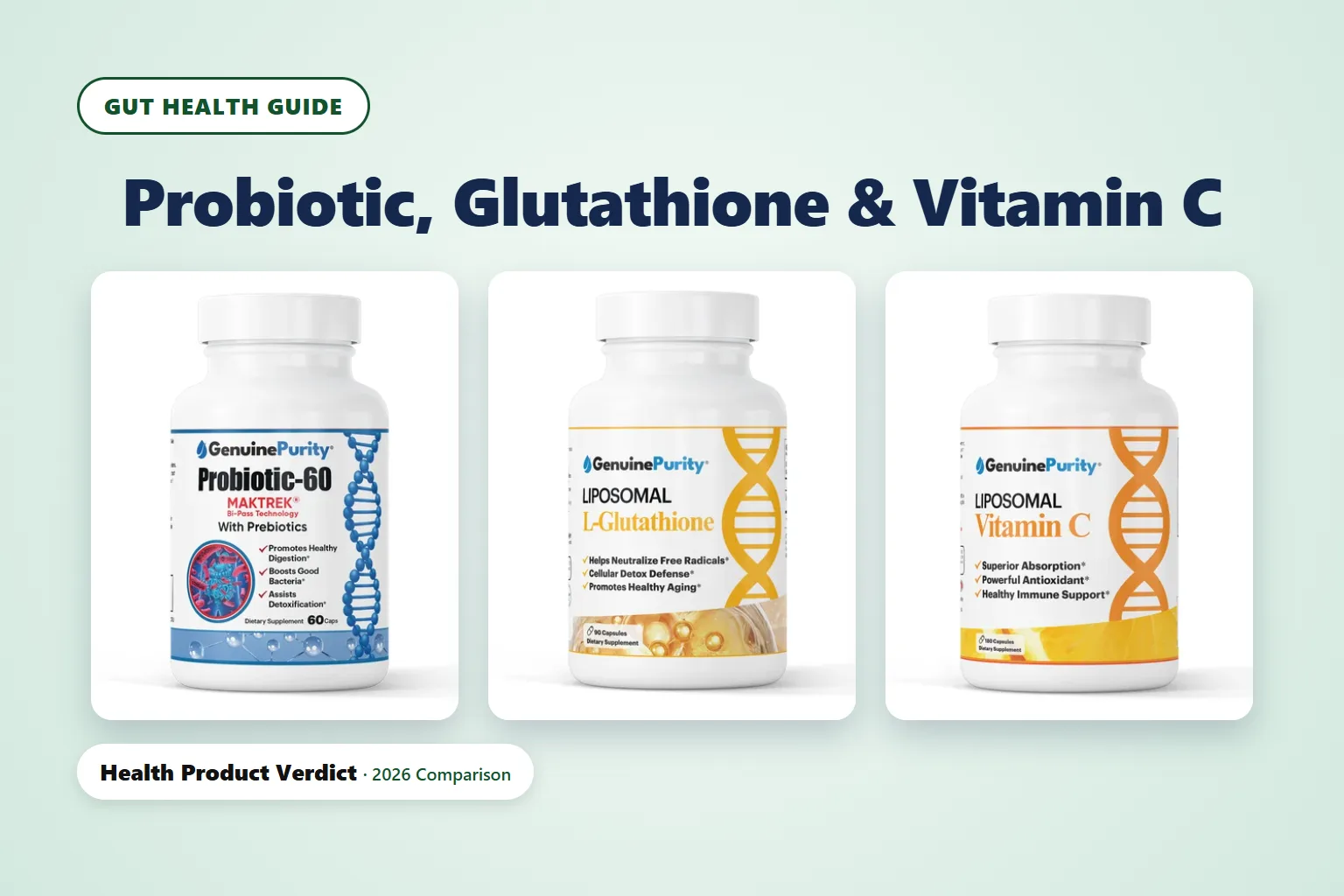
A probiotic supplement is the most searched starting point for gut health, and it is the only one of the three that acts directly on your gut microbiome. Liposomal L-Glutathione and Liposomal Vitamin C work as antioxidant and immune support rather than gut treatments, which is why they are usually layered on top of a probiotic instead of replacing it.
If you are trying to support your digestion and your immune system at the same time, the supplement aisle can feel like guesswork. Gut health and immune health are closely linked topics, but the products that serve each one work in very different ways.
This guide breaks down what each of these three supplements does, where the evidence is stronger or thinner, and which one fits your goals first.
Why Gut Health Starts With the Microbiome
Probiotics are live microorganisms intended to have health benefits when you consume them. The National Center for Complementary and Integrative Health says probiotics have shown promise for several purposes, including reducing antibiotic-associated diarrhea, while also noting that much remains to be learned about which conditions they help.
One point from the same source matters when you shop: different types of probiotics may have different effects. A benefit shown for one strain does not automatically carry over to another, so the specific strains in a formula matter as much as the total count.
That direct link to the gut, plus how well known the term is, explains why a probiotic is the natural first step in this comparison.
How We Evaluated These Supplements
Every product on this list comes from GenuinePurity, a supplement brand launched in December 2025. We looked at:
- Ingredient and dose: what is actually in the capsule, and whether the brand discloses the amount
- Form and delivery: for example, which strains are used, or whether liposomal encapsulation is included
- Third-party testing: whether Certificates of Analysis are published
- Price and guarantee: cost per bottle and the return policy
We have not personally lab-tested these products, and none of this replaces medical advice. Where the manufacturer has not published specific data, we say so directly instead of filling in the blank.
Probiotic-60
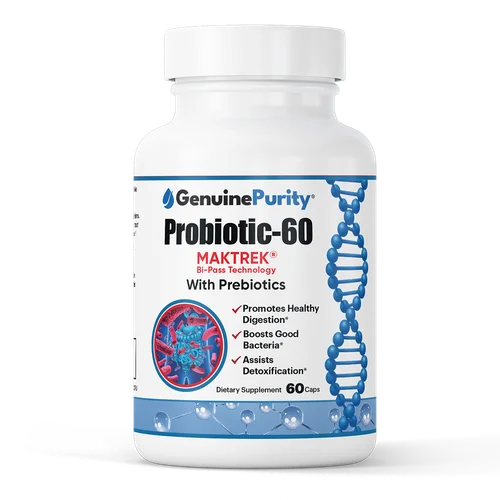
GenuinePurity’s Probiotic-60 delivers 60 billion CFU (colony-forming units) from four named strains: Lactobacillus acidophilus (La-14), Bifidobacterium lactis (Bi-04), Lactobacillus plantarum (Lp-115), and Lactobacillus paracasei (Lpc-37). It also includes 20 mg of fructooligosaccharide, a prebiotic fiber, and a 50 mg marine polysaccharide complex used in the brand’s MAKTREK Bi-Pass Technology.
The brand says that technology is designed to help the bacteria survive stomach acid, and it states that acid destroys up to 90% of standard capsules. We could not verify that figure independently, so treat it as a manufacturer claim.
Pros: highest consumer search demand in this comparison, named strains instead of a generic blend, prebiotic fiber included, acts directly on the gut
Cons: the highest price per bottle in this comparison, and strain-specific benefits depend on the individual, so results vary
Liposomal L-Glutathione
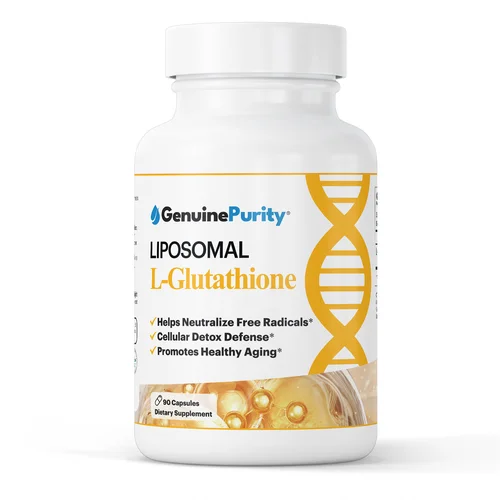
Glutathione is often called the body’s master antioxidant because every cell makes it and uses it to manage oxidative stress. GenuinePurity’s version provides 600 mg of L-Glutathione per serving inside a liposomal phospholipid complex (sunflower lecithin and phosphatidylcholine), designed to protect it from breaking down during digestion.
Two human studies are worth knowing about. A 6-month randomized, placebo-controlled trial in 54 adults found oral glutathione raised glutathione levels in blood. A 1-month pilot study of liposomal glutathione in 12 healthy adults also found higher levels, along with changes in oxidative stress markers.
Both studies measured glutathione levels in the body, not gut outcomes, and the second was small. That is why we position this as antioxidant and immune support rather than a gut supplement.
Pros: liposomal delivery aimed at absorption, human studies show oral glutathione can raise body levels, 600 mg dose is clearly disclosed
Cons: the research measures glutathione levels rather than gut or digestive results, and the liposomal study was small
Liposomal Vitamin C
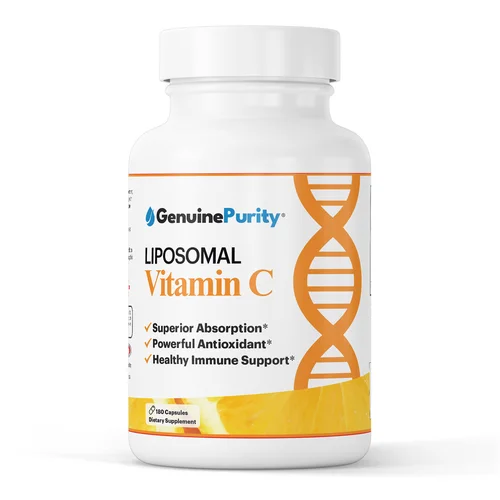
Vitamin C is a water-soluble antioxidant, and the NIH Office of Dietary Supplements notes the body also needs it to make collagen, to absorb iron from plant foods, and to help the immune system work properly. GenuinePurity’s formula delivers 1,350 mg per serving (two capsules) using plant-based liposomal encapsulation.
That dose is below the 2,000 mg daily upper limit the NIH lists for adults, but the limit counts vitamin C from all sources, including food and other supplements. Taking too much can cause diarrhea, nausea, and stomach cramps, and people with hemochromatosis (iron overload) should be careful with high doses.
Like glutathione, this is an immune and antioxidant supplement, not a gut treatment.
Pros: well-understood nutrient with a clear role in immune function, liposomal delivery, a lower subscription price than the probiotic
Cons: high dose, so check your total daily intake from all sources, and it does not target the gut
Quick Comparison
- Best overall starting point / highest search demand: Probiotic-60, the only one that acts directly on the gut, $49/bottle
- Best antioxidant layer with human data on body levels: Liposomal L-Glutathione, $39/bottle
- Best everyday immune support: Liposomal Vitamin C, $39/bottle
- Best stacked together: a probiotic covers the gut, while glutathione and vitamin C add antioxidant and immune support, which is why they are often combined rather than chosen one at a time
FAQ
Do I need all three of these, or just a probiotic?
No. A probiotic is the most direct option for gut health. Glutathione and vitamin C are optional layers for antioxidant and immune support, not required additions.
Does a higher CFU count mean a better probiotic?
Not necessarily. The NCCIH notes that different probiotic strains can have different effects, so which strains are included matters as well as how many billion CFU the label lists.
Are probiotics safe for everyone?
Not necessarily. The NCCIH reports cases of severe or fatal infections in premature infants who were given probiotics, and the FDA has warned health care providers about that risk. If you have a health condition or take medication, check with your doctor first.
Can I take vitamin C and glutathione together?
Many people do, and the two are often discussed together as antioxidants. We did not find a safety concern specific to this combination, but check with your doctor if you take medication or have a health condition.
How long does it take to notice a difference?
The manufacturer’s guarantee window is 97 days, which suggests they expect most people to need several weeks of consistent use before judging results. Individual experiences will vary.
Are there side effects?
The manufacturer has not published detailed side effect data for each formulation. The NIH notes that too much vitamin C can cause diarrhea, nausea, and stomach cramps, so mind your total daily intake.
Final Recommendation
If you are choosing one product to start with based on demand and how directly it targets the gut, Probiotic-60 is the clearest starting point. Liposomal L-Glutathione and Liposomal Vitamin C are worth layering in later if antioxidant and immune support are also on your list.
All three come with a 97-day money-back guarantee, which meaningfully lowers the risk of trying one to see how you respond.
This article is for informational purposes only and is not medical advice. Talk to your doctor before starting any new supplement, especially if you are pregnant, nursing, taking medication, or managing a health condition. This post contains affiliate links, which means we may earn a commission if you make a purchase, at no additional cost to you.


