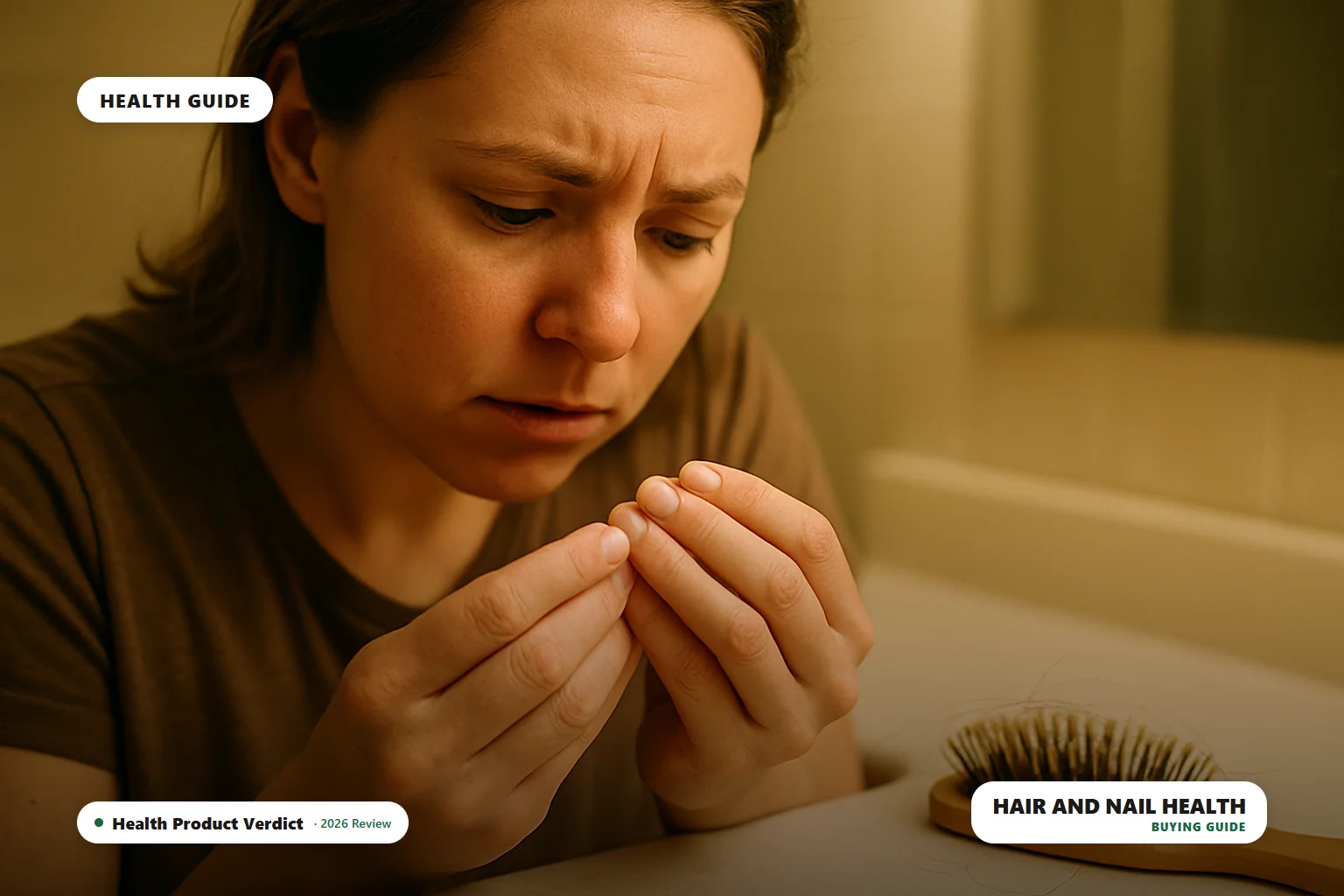
Hair loss and brittle nails at the same time is a pattern dermatologists see often, and it makes sense once you understand why. Both are built from keratin, a structural protein your body has to keep supplying, so anything that disrupts that supply chain tends to show up in both places around the same time.
Quick answer: when both show up together, it usually points to a shared underlying cause, since hair and nails are both made of keratin and depend on similar nutrients, hormones, and blood supply to grow normally. Iron deficiency and thyroid dysfunction are two of the more established shared causes. That said, recent research complicates the popular “just take biotin and iron” story: a 2024 case-control study found no significant difference in iron, ferritin, or biotin levels between women with chronic hair shedding and healthy controls, while zinc levels were significantly lower in the group with hair loss.
Why Hair and Nails Are Connected
Hair and nails are both made almost entirely of keratin, a tough structural protein produced by specialized cells. Neither tissue is metabolically “essential” in the way organs are, so when the body is under nutritional or hormonal stress, it tends to divert resources away from hair and nail production first, before it affects more critical systems. That’s part of why the same underlying issue often shows up in both places instead of just one.
Thyroid dysfunction is one of the more well-documented shared causes. Both an underactive and an overactive thyroid can disrupt the normal hair growth cycle and change nail texture and growth rate, since thyroid hormone affects cell turnover throughout the body, not just hair and nail cells specifically.
What the Research Actually Found
Iron deficiency has a real, documented connection to nail changes specifically. According to a clinical review on NCBI Bookshelf, koilonychia (spoon-shaped, concave nails) is found in about 5.4% of patients with iron deficiency anemia, and the same review lists thyroid disorders, both underactive and overactive, among the other documented causes of this same nail change. Source: NCBI Bookshelf, StatPearls.
Hair loss research tells a more complicated story than the popular “take biotin and iron” advice suggests. A 2024 case-control study compared 90 women with chronic telogen effluvium (a common pattern of diffuse hair shedding) to 90 healthy controls, measuring hemoglobin, ferritin, vitamin B12, vitamin D, thyroid function, zinc, copper, biotin, and selenium. The study found no significant difference in iron, ferritin, vitamin B12, thyroid function, vitamin D, copper, or biotin levels between the two groups. Zinc levels, however, were significantly lower in the women with hair loss, and selenium levels were significantly higher. Source: Journal of Cosmetic Dermatology (PMC).
This doesn’t mean iron and biotin never matter. It means the evidence for zinc is more consistent than commonly assumed, while the popular assumption that low iron or biotin automatically explains hair shedding isn’t well supported by this particular study. It’s also a reminder that guessing at a single nutrient rather than testing is unreliable either way.
Signs Worth Paying Attention To
- More hair than usual in your brush, shower drain, or pillow, paired with nails that split, peel, or break more easily than before
- Nails developing a spoon-like concave shape (koilonychia), which is specifically associated with iron deficiency and thyroid disorders
- Both changes starting or worsening around the same time, rather than one being a long-standing, separate issue
- Additional symptoms like fatigue, cold intolerance, or weight changes, which can point toward a thyroid cause
When to See a Doctor
See a doctor if these changes are sudden, rapid, or paired with other symptoms like fatigue, weight changes, or temperature sensitivity. A simple blood panel can check thyroid function, iron and ferritin, zinc, and other levels directly, which is far more reliable than guessing at a single supplement to try. Gradual, mild changes are less urgent but still worth mentioning at a routine visit.
Possible Solutions Worth Considering
Once a doctor has ruled out or confirmed a specific cause, some people look for daily supplement support for hair and nails generally.
Purality Health Hair Renewal
An oral spray built around AnaGain™ Nu, a patented pea sprout extract with real, checkable clinical research behind it, though that research was conducted on topical use rather than this oral spray format. It’s a reasonably well-documented ingredient choice for anyone specifically focused on hair.
Read our full Purality Hair Renewal review for the complete ingredient and pricing breakdown.
Keravita Pro
A general wellness formula positioned for both nail and hair support, built around ingredients with broad antioxidant and anti-inflammatory reputations rather than the more targeted, clinically-studied approach of AnaGain. It may appeal to anyone wanting one product that addresses both concerns at once.
Read our full Keravita Pro review for the complete ingredient and pricing breakdown.
FAQ
Why do I have hair loss and brittle nails at the same time?
Hair and nails are both made of keratin and depend on similar nutrients, hormones, and blood supply, so a shared underlying cause, most commonly thyroid dysfunction or certain nutrient imbalances, often affects both at once rather than just one.
Does iron deficiency really cause hair loss and brittle nails?
Iron deficiency has a well-documented link to a specific nail change called koilonychia (spoon nails), found in about 5.4% of iron-deficient patients. Its link to hair loss specifically is less consistent than popularly assumed. A 2024 study found no significant difference in iron or ferritin levels between women with chronic hair shedding and healthy controls.
Does biotin actually help with hair and nail health?
The evidence is weaker than its popularity suggests. A 2024 case-control study found no significant difference in biotin levels between women with chronic hair shedding and healthy controls, meaning biotin deficiency wasn’t a distinguishing factor in that study population.
What vitamin deficiency actually showed up in the hair loss research?
Zinc. A 2024 study found significantly lower zinc levels in women with chronic hair shedding compared to healthy controls, along with significantly higher selenium levels, making zinc a more evidence-backed factor to discuss with a doctor than iron or biotin in that specific research.
Can a thyroid problem cause both hair loss and brittle nails?
Yes. Thyroid dysfunction, both underactive and overactive, is a documented cause of both hair shedding and nail changes like koilonychia, since thyroid hormone affects cell turnover throughout the body.
Conclusion
This pairing usually shares a root cause, since both tissues are built from keratin and depend on similar nutrients and hormones. Thyroid dysfunction and iron deficiency (specifically for nail changes) are documented causes, but recent research suggests zinc deserves more attention than the popular biotin-and-iron story gives it. A simple blood panel, not guesswork, is the most reliable way to find out what’s actually going on.
For the full picture on hair and nail health causes and solutions, see our Thinning Hair or Weak Nails? Causes and What Might Help guide.
Related Reading
- Hair and Nail Health: The Complete Guide
- Thinning Hair or Weak Nails? Causes and What Might Help
- Purality Hair Renewal Review: Does AnaGain Work as an Oral Spray?
- Keravita Pro Review: Worth Trying for Nail and Hair Health?
- Nail Fungus Treatment: The Complete Guide
This article is for informational purposes only and is not a substitute for professional medical advice. Talk to a doctor about sudden or significant hair loss or nail changes.