
Trying to figure out if it’s nerve pain or muscle pain is one of the most common questions people search when a new ache doesn’t quite fit what they expect. The two can feel surprisingly similar in the moment, but they come from completely different causes and often need different approaches.
Quick answer: muscle pain is usually described as a dull, aching, or sore feeling tied to a specific muscle or movement, and it typically improves with rest. Nerve pain is more often described as burning, tingling, shooting, or electric-shock-like, doesn’t always follow a muscle’s shape, and can come with numbness or weakness. If pain follows a specific nerve pathway, comes with tingling or numbness, or doesn’t improve with rest, nerve pain is more likely.
How the Sensations Differ
Muscle pain, also called myalgia, tends to feel like a dull ache, soreness, tightness, or cramping. It’s the kind of pain you’d feel after an intense workout or from holding a tense posture too long. It’s usually easy to point to and tends to worsen with movement or pressure on that specific muscle.
Nerve pain, medically called neuropathic pain, feels different at a basic sensory level. It’s commonly described as burning, shooting, stabbing, or like an electric shock, and often comes with tingling (“pins and needles”), numbness, or a sensitivity to touch that wouldn’t normally hurt. For general background on nerve-related pain and neuropathy, see: NINDS Peripheral Neuropathy. For general background on musculoskeletal pain, see: NIAMS.
Location and Pattern Clues
Muscle pain generally stays within the boundaries of the affected muscle or muscle group and is often symmetric only if you did the same activity on both sides of your body. Nerve pain frequently follows the path of a specific nerve, which can mean it radiates in a line down an arm or leg, rather than staying localized to one muscle. Sciatica, where pain travels from the lower back down the back of one leg, is a classic example of this nerve-pathway pattern.
Nerve pain also often shows up symmetrically on both sides of the body at once, especially with conditions like peripheral neuropathy, even without doing the same activity on both sides. That symmetric, non-activity-linked pattern is a useful clue that points away from a simple muscle strain.
What Triggers or Relieves Each Type
- Muscle pain typically worsens with use of that specific muscle and improves with rest, gentle stretching, or heat
- Nerve pain often persists or worsens at rest, particularly at night, and may not respond to the same rest-and-heat approach that helps sore muscles
- Muscle pain usually responds to standard anti-inflammatory approaches and typically resolves within days
- Nerve pain can be triggered by light touch or temperature changes that wouldn’t normally cause discomfort, a phenomenon called allodynia
Red Flags That Point to Nerve Pain
A few specific signs make nerve pain more likely than a simple muscle issue:
- Tingling, numbness, or a “pins and needles” sensation alongside the pain
- Pain that radiates in a line rather than staying in one muscle
- Weakness in the affected area, not just pain
- Pain that persists or worsens at rest, especially at night
- Sensitivity to light touch that wouldn’t normally be painful
When to See a Doctor
See a doctor if pain is accompanied by numbness, weakness, or tingling, if it radiates down an arm or leg, if it doesn’t improve after a week or two of rest and basic care, or if it’s severe enough to interfere with daily activities. A doctor can perform specific tests, including nerve conduction studies, to confirm whether nerve involvement is present and identify the underlying cause.
Possible Solutions Worth Considering
Once you have a clearer sense of which type of pain you’re dealing with, or a diagnosis from a doctor, some people look for targeted support depending on the type.
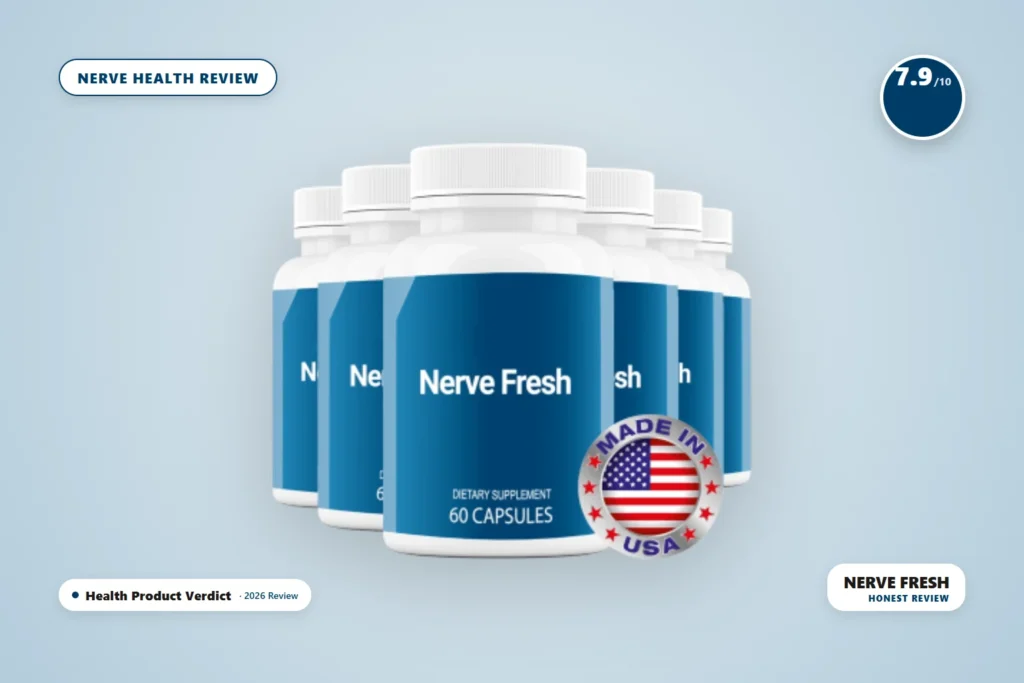
Nerve Fresh
A botanical formula using phytosome delivery technology, aimed at nerve discomfort like burning, tingling, and numbness through anti-inflammatory and calming pathways. It may be worth considering if your symptoms line up with the nerve pain pattern described above.
Read our full Nerve Fresh review for the complete ingredient and pricing breakdown.
Flexigenics
A stimulant-free formula built around PEA and quercetin, two ingredients with real anti-inflammatory research behind them, aimed at joint discomfort and mobility rather than nerve symptoms. It may be a better fit if your pain matches the muscle or joint pattern described above.
Read our full Flexigenics review for the complete ingredient and pricing breakdown.
FAQ
How do I know if my pain is nerve pain or muscle pain?
Muscle pain usually feels like a dull ache tied to a specific muscle and improves with rest. Nerve pain feels more like burning, tingling, or an electric shock, often radiates along a nerve pathway, and can persist or worsen at rest, especially with tingling or numbness present.
Can nerve pain be mistaken for muscle pain?
Yes, especially early on. Both can start as a dull ache, and it’s the additional signs, tingling, numbness, radiating pattern, or pain that worsens rather than improves with rest, that usually distinguish nerve pain over time.
What are the red flags of nerve pain?
Tingling or numbness alongside the pain, pain that radiates in a line rather than staying in one muscle, weakness in the affected area, pain that persists or worsens at rest, and sensitivity to light touch are all signs that point toward nerve involvement rather than a simple muscle issue.
Does nerve pain get better with rest like muscle pain does?
Not usually in the same way. Muscle pain typically improves with rest. Nerve pain often persists or even worsens at rest, particularly at night, which is one of the more reliable clues that something other than a simple muscle strain is going on.
What is the most common cause of nerve pain?
Common causes include a pinched or compressed nerve (such as sciatica), diabetes-related nerve damage, vitamin B12 deficiency, and shingles. A doctor can help identify the specific underlying cause through a physical exam and, if needed, nerve conduction testing.
Conclusion
Nerve pain or muscle pain often feel similar at first, but the sensation, location, and pattern usually give real clues. A dull ache tied to one muscle that improves with rest points to muscle pain. Burning, tingling, or radiating pain, especially at rest, points to nerve involvement. When in doubt, especially with numbness or weakness present, a doctor’s evaluation is the most reliable way to tell the two apart.
For more on nerve pain causes and solutions, see our Nerve Pain Relief: The Best Supplements, Habits, and When to See a Doctor guide. For more on joint and muscle pain, see our Joint and Muscle Pain: The Complete 2026 Guide.
Related Reading
- Nerve Pain Relief: The Best Supplements, Habits, and When to See a Doctor
- Joint and Muscle Pain: The Complete 2026 Guide
- Can a Vitamin B12 Deficiency Cause Nerve Pain and Tingling, Even Without Diabetes?
- Joint Stiffness and Muscle Soreness: What Actually Helps in 2026
This article is for informational purposes only and is not a substitute for professional medical advice. Talk to a doctor about persistent or severe pain, numbness, or weakness.