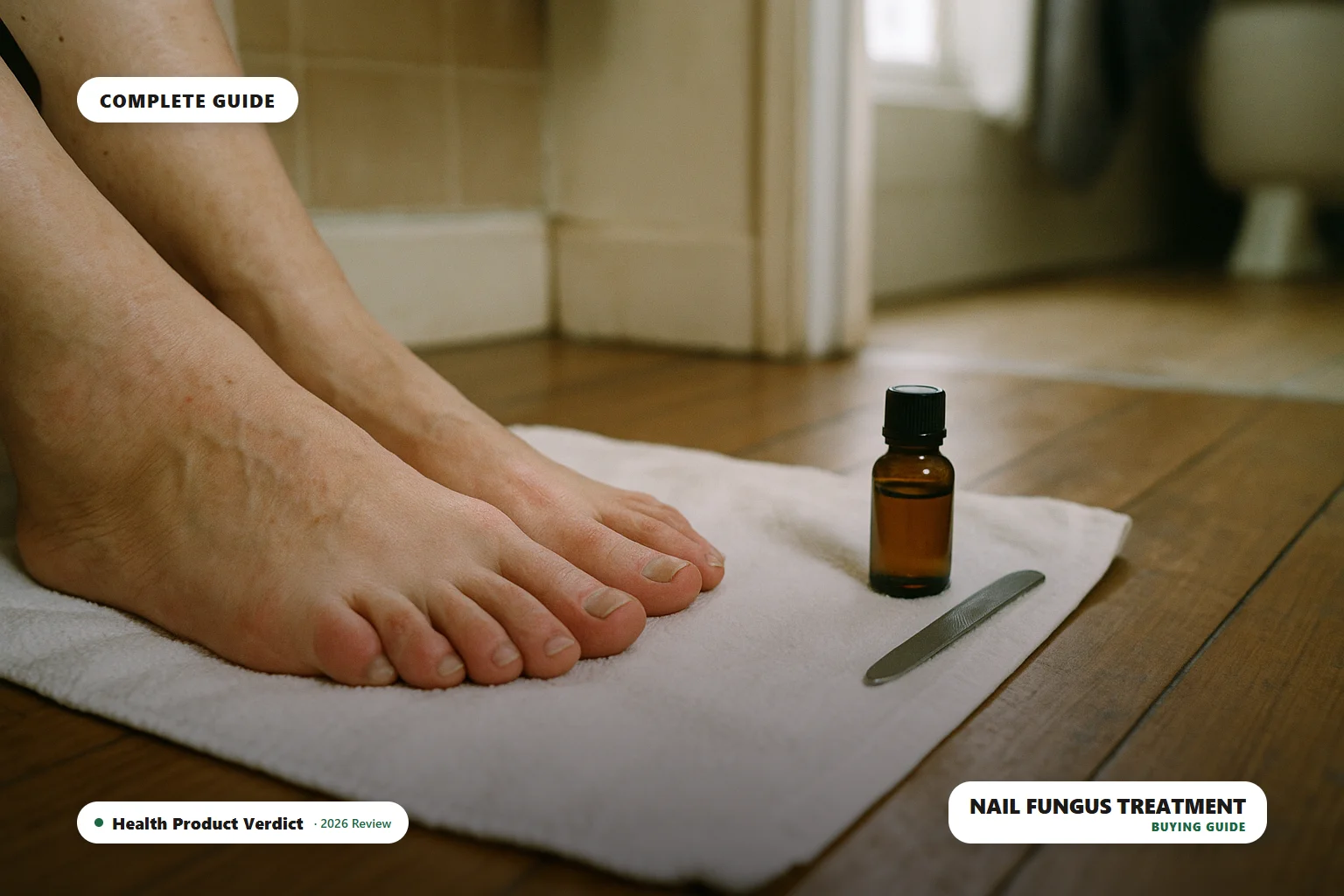
Discolored, thickened, or crumbly toenails send a lot of people searching for a nail fungus treatment that actually works. This guide gives you an honest, plain-English answer: why nail fungus happens, the daily habits that matter most, when to see a doctor instead of shopping, and how the topical products we have reviewed genuinely compare. No hype, no invented studies, just a clear look at what works and what does not.
Quick answer: nail fungus (onychomycosis) is a fungal infection that lives under the nail plate and rarely clears on its own. Topical products built around tea tree oil and undecylenic acid, two ingredients with real antifungal research behind them, are a reasonable first step for mild to moderate cases when used consistently for weeks to months. Severe, spreading, or long-standing infections usually need a doctor’s evaluation and sometimes an oral prescription antifungal, since no topical product is proven to cure every case.
- Why Nail Fungus Happens
- Signs Worth Paying Attention To
- When to See a Doctor
- Common Myths About Nail Fungus Treatment
- Daily Habits That Matter Most
- Do Nail Fungus Treatments Actually Work?
- Ingredients Worth Knowing
- Topical vs. Prescription Treatment
- How We Evaluate These Products
- Comparing Every Product We’ve Reviewed
- How to Choose the Right One
- FAQ
Why Nail Fungus Happens
According to the American Academy of Dermatology (AAD), nail fungus, medically known as onychomycosis, is caused by dermatophyte fungi that thrive in warm, moist environments such as the inside of shoes, locker rooms, and public showers. The fungus enters through small cracks in the nail or surrounding skin and establishes itself under the nail plate, where it is protected from air and light, which is part of why it is so persistent once it takes hold.
It is one of the most common nail conditions in adults, particularly those over 60, though it can affect anyone. Several factors increase your risk: walking barefoot in communal areas like pools and gyms, wearing tight-fitting or non-breathable footwear, having sweaty feet throughout the day, a weakened immune system, previous nail injuries, and diabetes or poor circulation.
This matters for anyone shopping for a product: because the fungus lives under the nail rather than on the surface, a treatment that only sits on top without genuine antifungal activity is unlikely to reach it. That is the honest framing behind everything else in this guide.
Signs Worth Paying Attention To
According to MedlinePlus, the infection typically starts as a small white or yellow spot near the tip of the nail and gradually spreads toward the base. Watch for:
- Discoloration, yellow, white, or brown, of one or more nails.
- Thickening of the nail that makes trimming difficult.
- Brittle, crumbly, or ragged nail edges.
- Nail separating from the nail bed.
- A mild to moderate foul odor coming from the nail.
For a deeper look at this specifically, see our guide: How to Get Rid of Toenail Fungus Naturally.
When to See a Doctor
None of the products in this guide are drugs, and none are intended to diagnose, treat, or cure a fungal infection in the medical sense. They are marketed as cosmetic or general wellness topicals. Book an appointment rather than relying on any of them if the infection covers most of the nail or affects multiple nails, if there is pain, swelling, or spreading redness around the nail, if there is no improvement after two to three months of consistent natural treatment, or if you have diabetes or circulation issues, where reduced sensation can let a minor infection go unnoticed and worsen.
Stopping a treatment plan halfway through, whether a topical or a prescription antifungal, before the infection has fully cleared and a healthy nail has grown out is a common reason fungal infections recur or become harder to treat the next time around. Finishing a full course matters more than switching products at the first sign of slow progress.
Common Myths About Nail Fungus Treatment
Myth: “A topical product can cure a severe, long-standing infection overnight.” None of the products in this comparison are studied or intended to reverse an advanced infection quickly. The ingredients with the best research, tea tree oil and undecylenic acid, are studied for supporting the appearance of mild to moderate cases over weeks to months, not an overnight fix.
Myth: “Nanotechnology means proven deeper penetration and faster results.” Nano Defense Pro markets nano-sized ingredient particles as a way to penetrate deeper than standard creams. That claim comes from the manufacturer, and no clinical trial on the finished formula is published to independently confirm it. It is a plausible mechanism, not a verified one.
Myth: “A ‘doctor-formulated’ claim on a sales page means the product is medically endorsed.” One product in this comparison markets itself as doctor-formulated, but the sales page does not name the doctor or provide verifiable credentials, and no manufacturer name is disclosed either. Unless a real, named, verifiable doctor and their credentials are provided, treat this as marketing language rather than a medical endorsement.
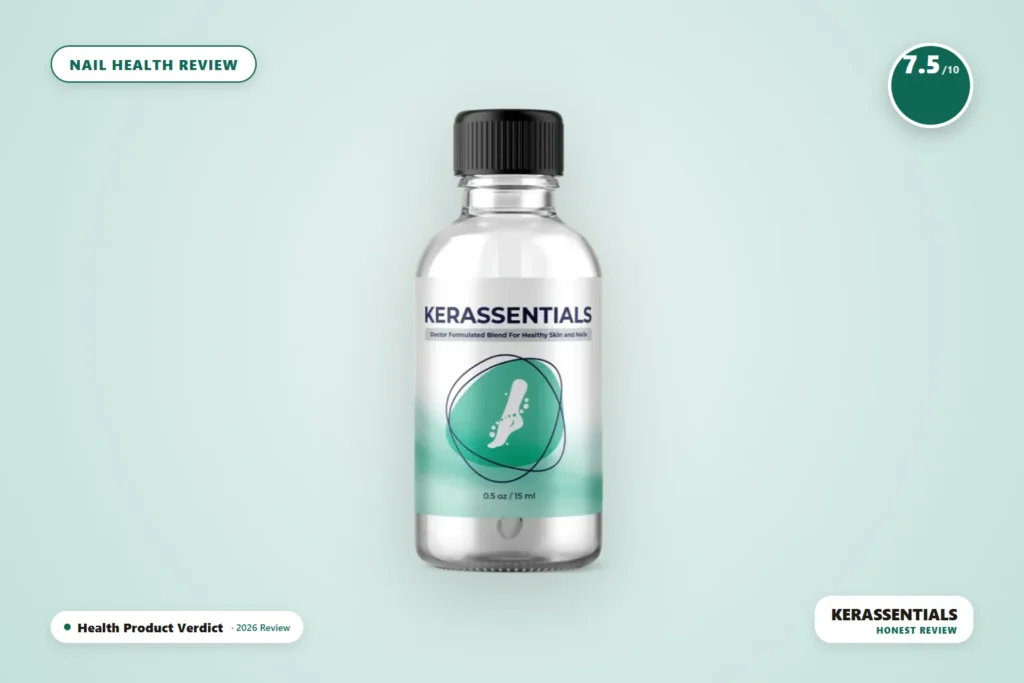
Myth: “A longer ingredient list means a more effective formula.” Kerassentials lists eight ingredients versus two or three primary actives in the other products, but a longer list without disclosed individual amounts is not automatically stronger. What matters more is whether tea tree oil and undecylenic acid, the two ingredients with real research, are present at all.
Daily Habits That Matter Most
For most people dealing with nail fungus, everyday habits do more of the heavy lifting than any single product. These are the foundations worth getting right before, or alongside, any topical treatment:
- Keep nails trimmed and dry. Moisture is the fungus’s best friend. Dry feet thoroughly after showers and trim nails straight across.
- Wear moisture-wicking socks and breathable shoes. Reducing moisture buildup slows fungal growth significantly.
- Wear sandals in communal areas. Pools, gyms, and locker rooms are common transmission points.
- Don’t share nail clippers, socks, or shoes. Fungus can spread between nails and between people through shared surfaces.
- Be patient. Toenails grow slowly, so visible improvement, with or without a product, takes weeks to months regardless of what any sales page implies.
None of these habits require buying anything, and they meaningfully affect how well any topical treatment, including every product in this comparison, is able to work.
Do Nail Fungus Treatments Actually Work?
Most topical nail fungus treatment products work by applying antifungal compounds directly to the nail and surrounding skin, where they are meant to reach the fungus living under the nail plate. The two ingredients with the most direct research support for this are tea tree oil and undecylenic acid, an FDA-recognized over-the-counter antifungal ingredient derived from castor oil. Both appear in Kerassentials, ProNail Complex, and Kerafirm Pro.
So do they work? The honest answer is “sometimes, modestly, and it depends.” Tea tree oil and undecylenic acid have real laboratory and small-scale clinical research behind them, but none of the four finished products compared here has been tested as a whole in an independent clinical trial. The evidence generally exists for the individual ingredients, not for the exact blend or delivery method in the bottle.
Nano Defense Pro takes a different approach altogether, built around nano-sized particles (nano-silver, nano-curcumin, and nano-quercetin) rather than the tea tree oil and undecylenic acid combination the other three rely on. The manufacturer frames this as a delivery-technology advantage rather than a specific antifungal-ingredient advantage, a genuinely different mechanism worth understanding before comparing it directly against the other three.
Ingredients Worth Knowing
When you compare nail fungus products, these are the ingredients with the most credible research, and the ones worth looking for on a label:
The most studied natural antifungal ingredient in this category, with laboratory research supporting activity against the fungi associated with nail infections. Appears in Kerassentials, ProNail Complex, and Kerafirm Pro.
A fatty acid derived from castor oil and recognized by the FDA as an over-the-counter antifungal ingredient for skin conditions, making it one of the more clinically grounded ingredients in this entire category. Appears in Kerassentials, ProNail Complex, and Kerafirm Pro.
Lavender oil has shown mild antimicrobial activity in lab studies and is included mainly for its calming, skin-soothing properties. Aloe vera soothes and hydrates skin irritated by fungal infection or by the antifungal ingredients themselves. Both appear in Kerassentials and ProNail Complex, and Kerafirm Pro also includes both lavender oil and aloe vera in its blend.
A well-documented antioxidant used in skincare for its moisturizing and skin-conditioning properties, supporting the surrounding skin while the antifungal ingredients work on the nail. Appears in ProNail Complex, as tocopheryl acetate in Kerassentials, and in Kerafirm Pro as well.
Nano-sized versions of ingredients with general antimicrobial and antioxidant reputations, marketed by Nano Defense Pro as capable of penetrating deeper than standard creams. No clinical trial on the finished formula is published to independently confirm this specific claim.
Notice what several products in this space lean on instead: a “proprietary blend” without individual amounts disclosed. None of the four products compared here name a manufacturer on their official sales page either, which is worth knowing going in rather than assuming otherwise.
Topical vs. Prescription Treatment
Every product in this comparison is a topical, over-the-counter option, which is generally where doctors recommend starting for mild to moderate cases. Oral prescription antifungals, most commonly terbinafine, are more effective for moderate to severe infections but come with their own tradeoffs: treatment courses typically run 6 to 12 weeks, and because the medication is processed by the liver, doctors usually order blood tests before and sometimes during treatment to monitor liver function, especially for people with existing liver conditions or those taking other medications that affect the liver.
This is a big part of why many people try a topical approach first: no prescription is required, there is no systemic medication to monitor, and the downside risk is largely limited to a possible skin reaction rather than a liver-related side effect. The tradeoff is that topical treatments generally take longer and are less effective against severe or long-standing infections, since it is harder for any topical ingredient to fully penetrate a thickened, damaged nail plate than it is for an oral medication to reach the nail bed through the bloodstream.
How We Evaluate These Products
Every review on this site is scored on the same five factors, so the comparison below is apples-to-apples rather than each product grading itself against its own marketing narrative. We look at ingredient quality (do the named ingredients have real, independent research behind topical antifungal or skin-conditioning use?), scientific evidence (has the finished product itself been separately tested?), value for money (price per bottle at the best available package, weighed against the guarantee length), customer feedback, and manufacturer trust (whether the company discloses who they are and what quality standards they follow).
We don’t factor sales page storytelling, urgency tactics, or unverifiable testimonials into the score at all, since none of those things say anything about whether the formula actually works.
Comparing Every Product We’ve Reviewed
Here is how the nail fungus treatments we have reviewed stack up, from highest to lowest overall score. Click any name for the full, detailed review with ingredients, pricing, and our complete verdict.
| Product | Score | Format | Best For | Guarantee |
| Nano Defense Pro | 7.8/10 | Liquid drops (nanoparticle) | Those wanting the longest guarantee window | 180-Day |
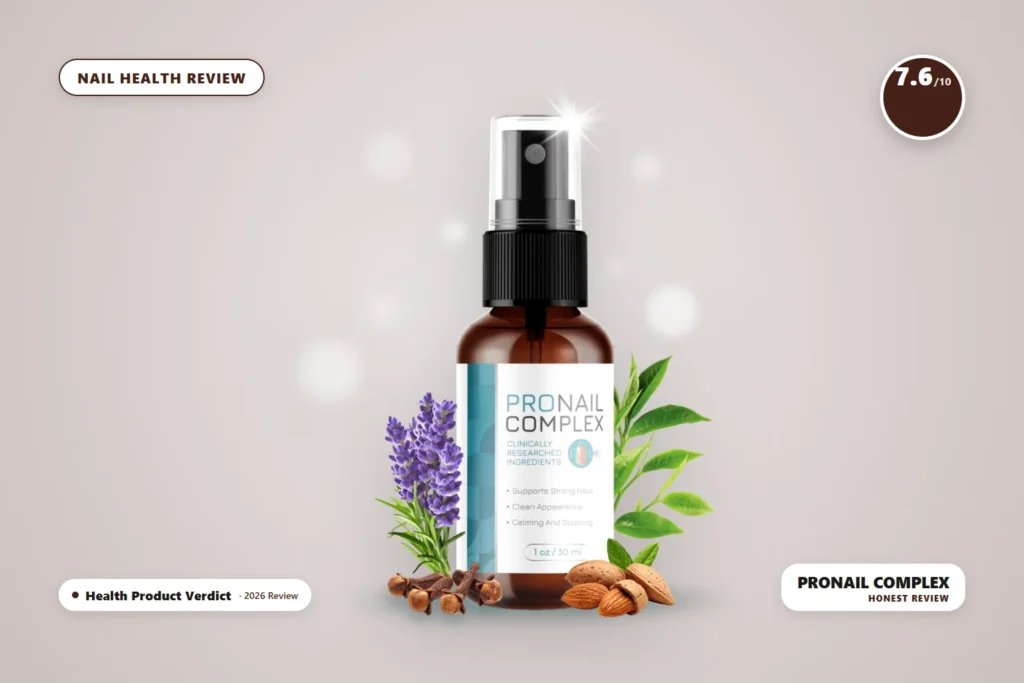
| ProNail Complex | 7.6/10 | Mist spray | Those wanting a fast-absorbing spray with two research-backed actives | 60-Day |
| Kerassentials | 7.5/10 | Liquid oil blend | Those wanting the broadest natural ingredient list | 60-Day |
| Kerafirm Pro | 7.2/10 | Brush applicator + cotton swab | Those wanting a dedicated precision applicator routine | 60-Day |
All four are topical products rather than pills, and none has published clinical trial data for the finished formula itself, only for individual ingredients. Nano Defense Pro edges out the others mainly on its longer, lower-risk guarantee, while Kerassentials, ProNail Complex, and Kerafirm Pro all rely on the same two research-backed actives, tea tree oil and undecylenic acid, differing mainly in ingredient count and application format (spray, drops, or a dedicated brush-and-swab routine).
How to Choose the Right One
Start with the ingredients, not the marketing. Kerassentials, ProNail Complex, and Kerafirm Pro all include tea tree oil and undecylenic acid, the two most well-researched antifungal ingredients in this category, so the choice between them mostly comes down to format: a fast-absorbing spray (ProNail Complex), a broader oil blend applied by hand (Kerassentials), or a dedicated brush-and-swab routine applied multiple times a day (Kerafirm Pro).
Favor a longer money-back guarantee, which lowers your risk while you test your own response over several weeks or months, since nails grow slowly and results take time either way. Nano Defense Pro’s 180-day window is the longest of the four. And if you have sensitive skin, patch test any of these on a small area before full daily use, since all four contain essential oils or active compounds that can occasionally irritate sensitive skin.
FAQ
Can a topical product cure severe nail fungus?
No. None of the products in this guide are drugs or a substitute for medical treatment. They are best suited to mild to moderate cases used consistently over weeks to months. Severe or long-standing infections typically need a doctor’s evaluation and may require oral prescription antifungals.
How long does it take to see results?
Because nails grow slowly, most people need several weeks of consistent daily application before noticing visible changes, and full replacement of a damaged nail section can take a few months. This is true across all four products compared here, regardless of format or ingredient list.
Are these products FDA approved?
No. These are cosmetic or general wellness topicals, not FDA-approved drugs. Undecylenic acid, found in Kerassentials, ProNail Complex, and Kerafirm Pro, is separately recognized by the FDA as an over-the-counter antifungal ingredient, but that is a different thing from the finished product itself being FDA approved.
Can I use more than one of these products at the same time?
We don’t recommend it. Layering multiple topical treatments increases the risk of skin irritation without any clear added benefit, and makes it harder to tell which product, if any, is actually helping. Choose one and give it a full trial period before considering a switch.
Is nanotechnology proven to work better than regular creams?
Not independently. Nano Defense Pro’s manufacturer claims its nano-sized particles penetrate deeper than standard creams, but no clinical trial on the finished formula is published to confirm this specific claim. It is a plausible mechanism, not a verified one.
Which product should I start with?
If you want the two most well-researched antifungal ingredients in a fast-absorbing format, ProNail Complex is worth a closer look. If you want the broadest ingredient list, Kerassentials is worth considering. If you want the longest guarantee window to test patiently, Nano Defense Pro’s 180 days is the longest of the four. If you would rather use a dedicated brush-and-swab routine over a spray or drops, Kerafirm Pro is the newest option, though it is too new to have an outside track record yet. Read the full reviews linked throughout this guide before deciding.
Related Reading
- What Happens If You Leave Toenail Fungus Untreated?
- Vicks VapoRub for Toenail Fungus: Does It Actually Work?
- How to Choose the Best Supplements: A Buyer’s Guide
- How to Get Rid of Toenail Fungus Naturally
- Best Nail Fungus Treatments 2026
- Kerassentials Review
- ProNail Complex Review
- Kerafirm Pro Review
- Nano Defense Pro Review
Health Product Verdict provides independent analysis and reviews of health-related products. Our content is for informational purposes only and does not constitute medical advice. Always consult a qualified healthcare professional before starting any treatment for a nail or skin condition, and see a doctor if an infection is severe, spreading, or not improving.