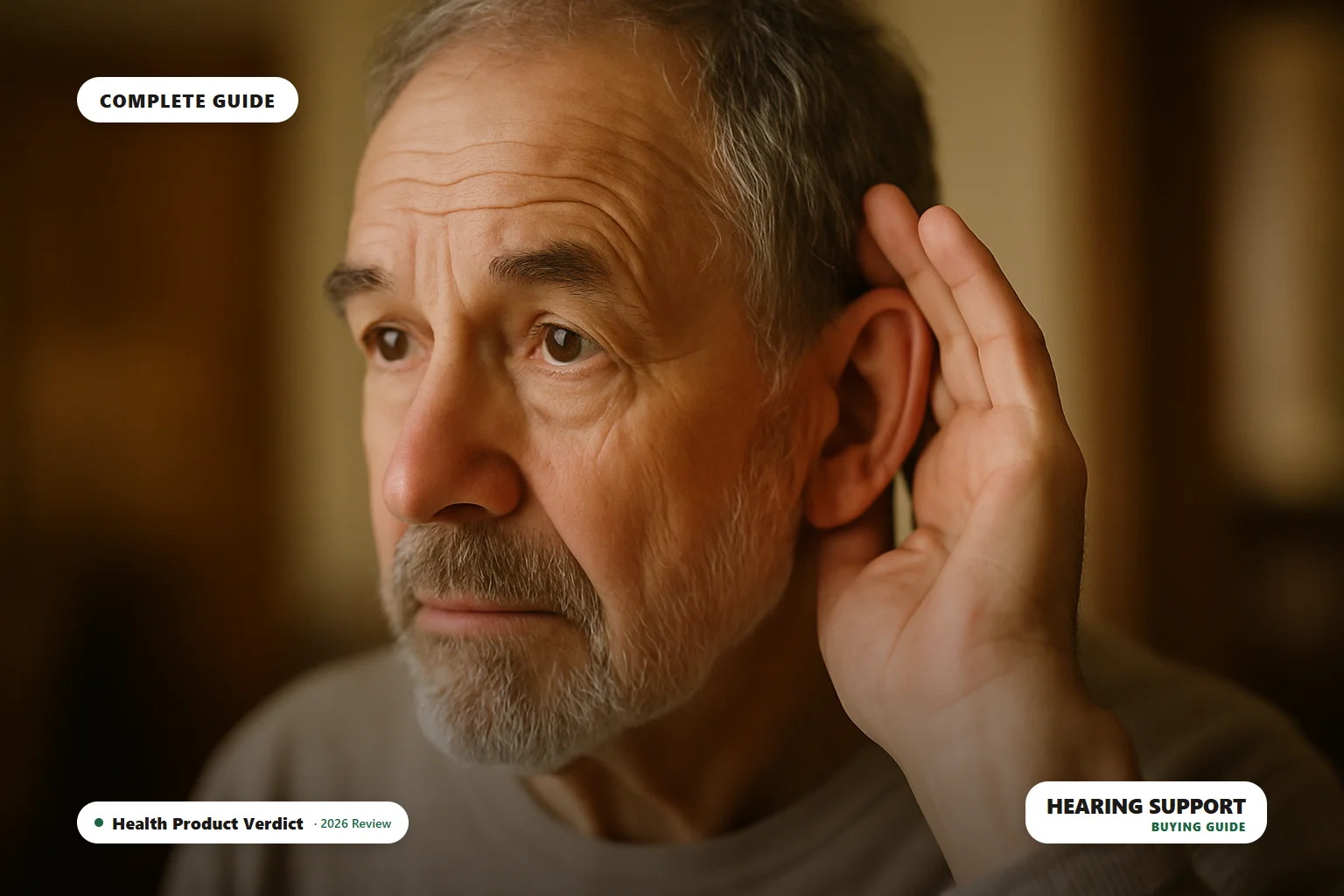
Quick answer: Hearing support supplements target general inner-ear and cognitive health, not hearing loss itself, and none of them restore hearing that has already been lost. Age-related hearing changes are common and often permanent, so these products are best understood as general wellness support alongside proper hearing evaluation and, when needed, hearing aids, not a substitute for either.
- Why Hearing Changes Happen With Age
- Signs Worth Paying Attention To
- When to See a Doctor
- A Quick Example: Reading Past the Marketing
- Common Myths About Hearing Supplements
- Lifestyle Strategies That Matter Most
- How Hearing Supplements Work
- Ingredients Worth Knowing
- Reading Labels in This Category
- How We Evaluate These Products
- Comparing Every Product We’ve Reviewed
- How to Choose the Right One
- FAQ
- Related Reading
Hearing support is a heavily marketed supplement category, and also one where the gap between what an ingredient is actually studied for and what a sales page claims it does can be wide. This guide covers why age-related hearing changes happen, what the ingredients in popular hearing supplements are actually researched for, and an honest side-by-side look at every hearing product we’ve reviewed on Health Product Verdict.
If you already know which product you’re interested in, jump straight to the comparison section. If you want the full picture first, keep reading.
One thing worth being upfront about before anything else: no supplement, in this comparison or otherwise, can reverse hearing loss caused by damaged inner ear hair cells. Once those cells are lost, they generally do not regenerate in humans. What supplements in this category are realistically positioned to do is support the surrounding factors, like circulation and oxidative stress, that may help protect the hearing you still have. Keeping that distinction in mind will make the rest of this guide, and any sales page you read afterward, much easier to evaluate honestly.
Why Hearing Changes Happen With Age
According to the National Institute on Deafness and Other Communication Disorders (NIDCD), approximately 15% of American adults, about 37.5 million people, report some trouble hearing. Age-related hearing loss, known clinically as presbycusis, becomes especially common with age: roughly one in three people between ages 65 and 74 has hearing loss, and nearly half of those older than 75 experience difficulty hearing.
The NIDCD identifies several contributing factors to presbycusis, including changes in the inner ear’s structure, age-related changes in the middle ear, and complex changes along the nerve pathways that carry sound signals from the ear to the brain. Long-term noise exposure, certain medical conditions like high blood pressure and diabetes, some medications that are toxic to the ear’s sensory cells, and genetic susceptibility can all play a contributing role as well. In rare cases, middle ear abnormalities like otosclerosis are involved.
Tinnitus, a ringing, buzzing, or hissing sound with no external source, is a separate but closely related experience. Surveys estimate that 10 to 25% of adults have experienced it. Hearing loss is strongly associated with tinnitus, though not everyone with hearing loss develops it, and not everyone with tinnitus has measurable hearing loss. Noise exposure, certain medications (including common over-the-counter pain relievers at high doses), earwax blockages, and head or neck injuries are among the most frequently cited causes.
Signs Worth Paying Attention To
- Asking people to repeat themselves more often, especially in noisy environments
- Turning the TV or phone volume up higher than others find comfortable
- Difficulty following conversations in groups or with background noise
- Ringing, buzzing, or hissing in one or both ears
- NeuroQuiet Review
For a deeper look at this specifically, especially if ringing or buzzing is the main issue, see our guide: Ringing in the Ears or Hearing Changes? What Actually Helps.
When to See a Doctor
None of the products in this guide are intended to diagnose, treat, or cure hearing loss, tinnitus, or any ear condition, and none of them are a substitute for a proper hearing evaluation from a doctor or audiologist. A few situations call for a professional evaluation before trying any supplement:
- Sudden hearing loss in one or both ears
- Hearing loss accompanied by pain, drainage, or dizziness
- Tinnitus that is only in one ear, pulsing in rhythm with your heartbeat, or came on suddenly
- Hearing changes after a head injury
- You haven’t had a baseline hearing test and are noticing changes in daily life
A Quick Example: Reading Past the Marketing
Hearing supplement sales pages frequently lean on vivid descriptions of “protecting” or “repairing” the tiny hair cells inside the inner ear, sometimes paired with dramatic backstories about a specific discovery. When you land on one of these pages, it’s worth separating that narrative from the actual ingredient list: read the ingredients on their own, check whether doses are disclosed, and compare that list against what’s covered in the ingredients section below, rather than being swayed by the framing alone.
A concrete example from our own reviews: several products in this comparison include ingredients, like grape seed extract, green tea, and Gymnema Sylvestre, that are primarily studied for cardiovascular and blood sugar support in general research, not for hearing specifically. That doesn’t automatically make them useless in a hearing formula, since healthy circulation is genuinely relevant to inner ear health, but it does mean the “hearing support” framing on the label is often a broader wellness story rather than a direct, ear-specific research claim. Evaluating the actual ingredient list on its own merits, separate from the story wrapped around it, is the most reliable way to judge any product in this category.
Common Myths About Hearing Supplements
Myth: Hearing supplements can restore or reverse hearing loss. None of the products in this comparison are studied or intended to regenerate damaged inner ear hair cells or reverse existing hearing loss. Once those cells are damaged, current research does not support the idea that any oral supplement can bring them back.
Myth: Every ingredient in a “hearing” formula is specifically studied for hearing. As covered above, several common ingredients in this category (grape seed extract, green tea, Gymnema Sylvestre, and traditional botanicals like epimedium or muira puama) are more commonly studied for circulation, blood sugar, or general vitality than for hearing specifically. That’s not necessarily disqualifying, but it’s worth knowing which ingredients in a given formula are ear-specific and which are general wellness additions.
Myth: A dramatic origin story on a sales page means the product is backed by new research. Personal narratives framed around a specific discovery or a researcher’s “breakthrough” are a common storytelling device in this category. Unless real, named, verifiable research is cited and linkable, treat this as marketing narrative, not a scientific claim.
Myth: A higher price or longer ingredient list means a more effective formula. Some of the most heavily marketed products in this category list a dozen or more ingredients at undisclosed individual doses. A shorter list with transparent, meaningful doses of ingredients that have at least indirect relevance to circulation or oxidative stress is generally more useful than a long list you can’t actually evaluate.
Lifestyle Strategies That Matter Most
- Protect your ears from loud noise. Use earplugs or earmuffs around loud machinery, concerts, or power tools; noise exposure is one of the most preventable contributors to hearing damage.
- Get a baseline hearing test. Establishing a baseline makes it much easier for a professional to identify meaningful changes early.
- Manage blood pressure and blood sugar. Both are cited by the NIDCD among the medical conditions linked to age-related hearing changes.
- Avoid inserting objects into the ear canal. Cotton swabs and similar objects can push wax deeper or damage the eardrum, worsening rather than improving hearing.
- Review medications with your doctor. Some medications, including certain antibiotics and high-dose pain relievers, are known to be toxic to the ear’s sensory cells or associated with tinnitus.
None of these habits require dramatic lifestyle changes, and several of them, noise protection in particular, are genuinely among the most evidence-backed ways to preserve hearing over time, arguably more consistently useful than any single supplement ingredient on its own.
How Hearing Supplements Work
Products in this category generally take one of two broad approaches. The first leans on antioxidants and circulation-support ingredients, like grape seed extract, green tea, and marine algae extracts, on the theory that better blood flow and reduced oxidative stress around the inner ear may help protect the hearing you currently have. The second leans more heavily on traditional botanicals associated with general vitality, hormone balance, or nerve function, on the theory that overall wellness indirectly supports hearing health.
Neither approach is studied to regenerate lost hair cells or reverse existing hearing loss, and it’s worth being skeptical of any product that implies otherwise. The more grounded framing, and the one worth looking for in a sales page, is “supporting” or “protecting” ongoing ear health rather than “restoring” or “reversing” hearing that’s already been lost.
Ingredients Worth Knowing
A marine algae extract studied for general antioxidant activity. Included in hearing formulas under the theory that reducing oxidative stress may help protect the inner ear, though direct, hearing-specific human research is limited. Featured in AquaPeace, alongside sea buckthorn, chlorella and astaxanthin.
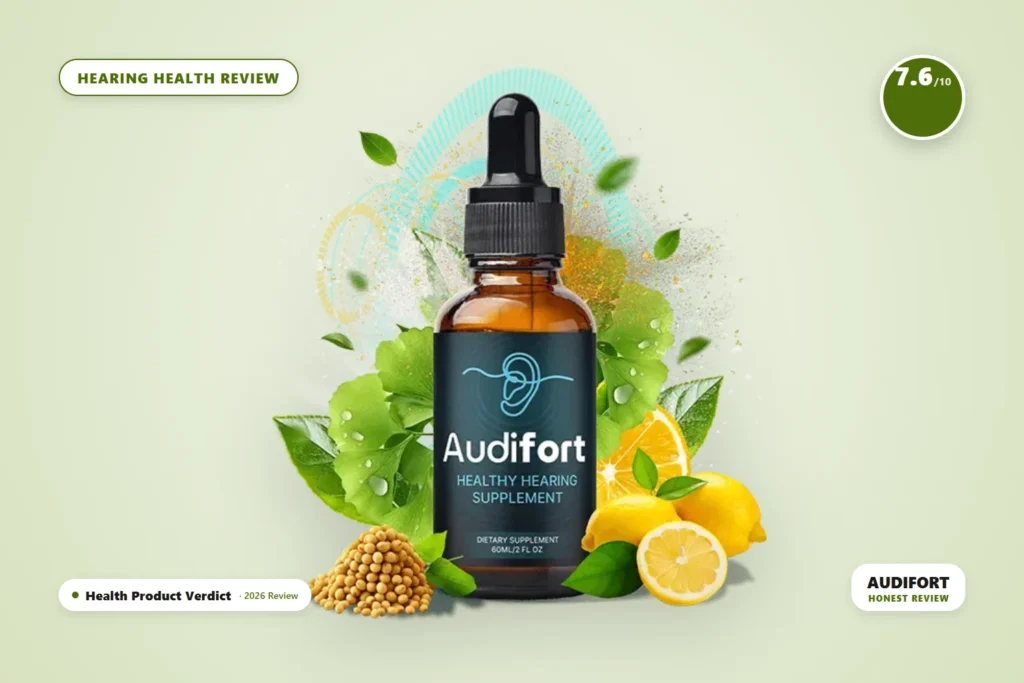
Antioxidants most commonly studied for cardiovascular and circulation support. Included in ear formulas under the theory that healthy blood flow supports inner ear function, rather than being studied for hearing outcomes directly. Featured in both ZenCortex and Audifort.
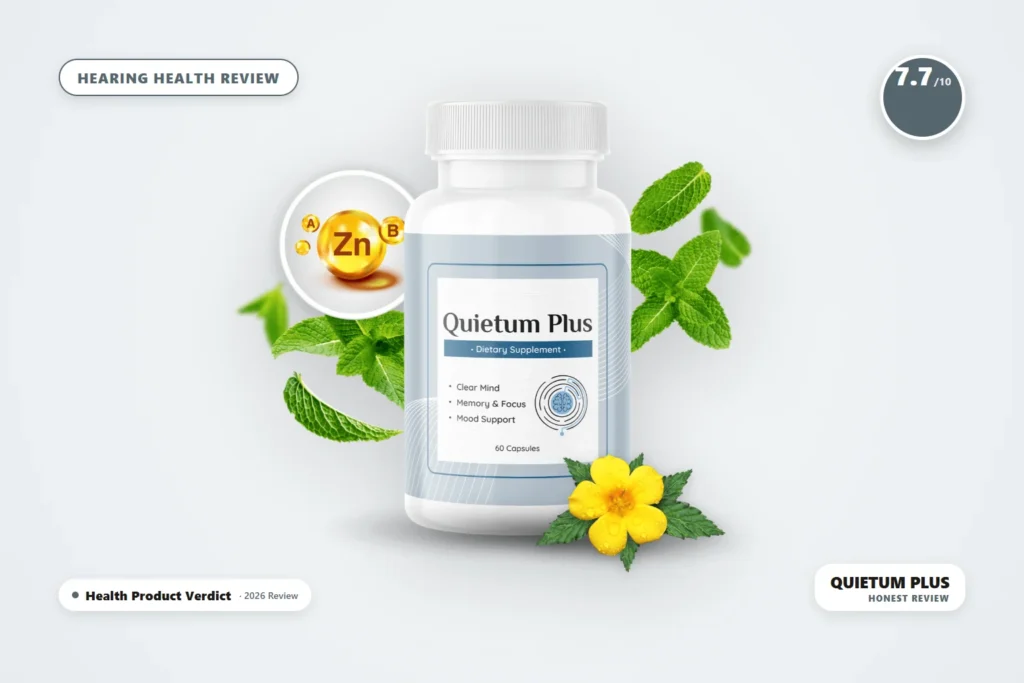
Traditional botanicals more commonly associated with libido and general vitality formulas than with hearing research specifically. Worth knowing that these aren’t ear-specific ingredients, even though they appear in a hearing-branded product. Featured in Quietum Plus alongside ashwagandha, vitamins A and B, and zinc.
Most commonly studied for blood sugar support rather than hearing. Appears in both ZenCortex and Audifort, another example of a general-wellness ingredient included in an ear-focused formula rather than one with direct hearing research behind it.
A calming, nerve-signaling compound sometimes included for its general role in the nervous system. Not specifically studied for restoring hearing, but plausibly relevant given tinnitus’s connection to nerve pathway activity. Featured in Audifort.
Reading Labels in This Category
The same general framework from our supplement buyer’s guide applies here, with one detail specific to this category: watch closely for language that implies “restoring,” “reversing,” or “repairing” hearing loss. As covered above, no current research supports the idea that an oral supplement can regenerate damaged inner ear hair cells, so a product claiming otherwise is worth extra scrutiny regardless of how compelling the surrounding story is.
Also check whether the ingredients in a formula are disclosed at specific doses or buried inside an undisclosed proprietary blend total. Several products in this category list ten or more ingredients but disclose no individual doses at all, which makes it impossible to judge whether any single ingredient is present at a meaningful amount.
How We Evaluate These Products
Every review on this site is scored against the same criteria, so the comparison below is apples-to-apples rather than each product grading itself against its own marketing narrative, which matters especially in a category this prone to dramatic storytelling. We deliberately don’t factor sales page storytelling, urgency tactics, or unverifiable testimonials into the score at all, since none of those things say anything about whether the formula actually works.
- Ingredient quality: whether named ingredients have real, independent research behind their general role in circulation, oxidative stress, or nerve health, even where direct hearing-specific research is limited.
- Scientific evidence: whether the finished product itself has been separately tested, and how ingredient-level research compares to product-level claims.
- Value for money: price per bottle at the best available package, weighed against the guarantee length.
- Customer reviews: patterns across available feedback, weighed as one input among several.
- Manufacturer trust: whether the company discloses who they are and what quality standards they follow.
Comparing Every Product We’ve Reviewed
We’ve reviewed four hearing support products in depth. Here’s an honest side-by-side, based on our full reviews of each.
| Product | Score | Format | Best For | Guarantee |
| Quietum Plus | 7.7/10 | Capsule | Adults wanting the highest-scoring option in this comparison | 60-Day |
| Audifort | 7.6/10 | Liquid drops | Adults wanting the longest guarantee window | 90-Day |
| ZenCortex | 7.5/10 | Liquid drops | Adults preferring an easy daily liquid drop | 60-Day |
| AquaPeace | 7.4/10 | Capsule | Adults wanting a marine-algae-based formula | 60-Day |
How to Choose the Right One
- Want the longest guarantee window? Audifort’s 90-day guarantee is the longest in this comparison.
- Prefer a liquid over a capsule? ZenCortex and Audifort are both liquid drop formats.
- Prefer a marine-algae-based approach? AquaPeace is the only product in this comparison built around ecklonia cava and related marine antioxidants.
- Want the highest-scoring option overall? Quietum Plus scored highest in our comparison at 7.7/10.
- Not sure where to start? Re-read the ingredient list against your own health history and expectations before comparing price or guarantee length.
FAQ
Can hearing supplements restore hearing I’ve already lost?
No. None of the products in this guide are studied or intended to regenerate damaged inner ear hair cells or reverse existing hearing loss. Current research does not support the idea that any oral supplement can restore hearing that’s already been lost. Supplements in this category are positioned as general support for ongoing ear health, not a treatment for existing hearing loss.
Can these products replace a hearing aid or a professional hearing evaluation?
No. None of the products in this guide are a substitute for a professional hearing evaluation, a hearing aid, or any other treatment recommended by a doctor or audiologist. If you’re noticing hearing changes, a proper evaluation is the right first step, regardless of whether you also try a supplement.
How long does it take to notice a difference?
Most of the ingredients in this comparison, particularly the antioxidant and circulation-support ones, are typically evaluated over 8-12 weeks of consistent use in general research on their primary use case. A similar timeframe is a reasonable expectation here. Give any single product a full trial period before deciding it isn’t working, rather than switching products every few weeks.
Do these products interact with medication?
Possibly. Several ingredients in this comparison, including grape seed extract and green tea, can interact with blood-thinning medications, and Gymnema Sylvestre may affect blood sugar levels in people on diabetes medication. If you’re on prescription medication, talk to your doctor before adding any of these supplements, and bring the full ingredient list with you.
Which product should I start with?
If you want the highest-scoring option in our comparison, Quietum Plus is worth a closer look. If you want the longest guarantee window to test a product risk-free, Audifort’s 90 days is the longest available here. Read the full reviews linked throughout this guide before deciding.
Is ringing in my ears the same thing as hearing loss?
Not necessarily. Tinnitus (ringing, buzzing, or hissing with no external source) is strongly associated with hearing loss, but the two don’t always occur together. Some people with tinnitus have no measurable hearing loss, and some people with hearing loss never experience tinnitus. If ringing or buzzing is your main concern, our dedicated guide linked below covers it in more depth.
Related Reading
- Best Hearing Support Supplements 2026: 5 Options Compared
- How to Choose the Best Supplements: A Buyer’s Guide
- Ringing in the Ears or Hearing Changes? What Actually Helps
- Quietum Plus Review
- Audifort Review
- ZenCortex Review
- AquaPeace Review
Health Product Verdict provides independent analysis and reviews of health-related products. Our content is for informational purposes only and does not constitute medical advice. Always consult a qualified healthcare professional before starting any supplement, and always discuss new or worsening hearing changes or tinnitus with a doctor or audiologist.