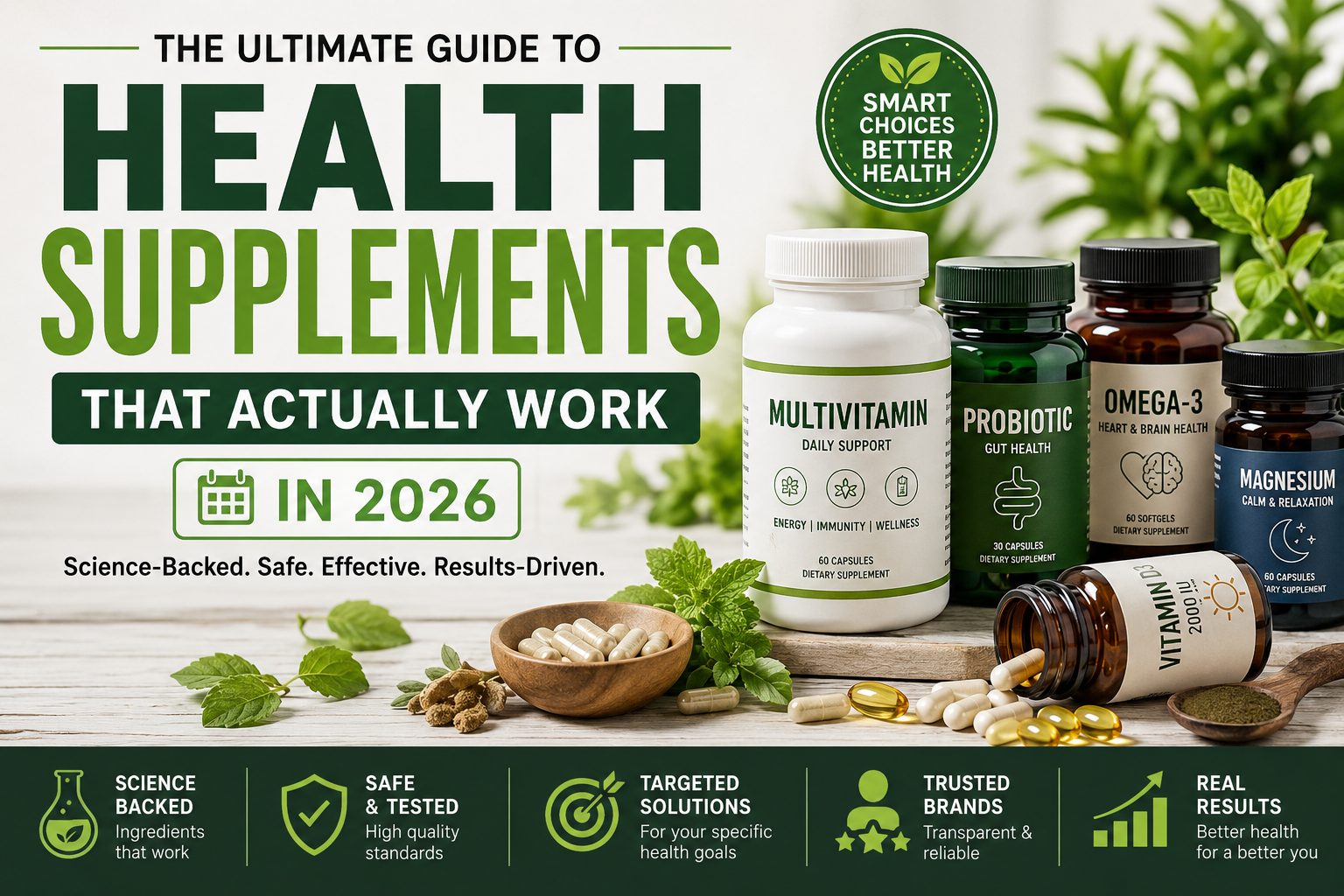
Discover the best health supplements that actually work in 2026. Learn how to choose safe, effective products, avoid scams, and improve your health with proven, science-backed solutions.
Do Health Supplements Really Work in 2026?
The health supplement industry is growing faster than ever in 2026. Millions of people are using vitamins, probiotics, and natural formulas to improve energy, immunity, digestion, sleep, and overall wellness.
But with so many options available, one important question remains:
Do health supplements really work?
The truth is: some do, and some don’t.
Certain supplements are backed by scientific studies and real-world results, while others are overhyped or poorly formulated. This guide will help you understand exactly what works, what doesn’t, and how to choose the right supplements for your health goals.
What Are Health Supplements?
Health supplements are products designed to support your body’s natural functions. They are not meant to replace food, but to complement your diet and fill nutritional gaps.
Common Types of Health Supplements
- Vitamins (Vitamin D, B12, etc.)
- Minerals (Magnesium, Zinc, Iron)
- Probiotics (gut and oral health support)
- Herbal extracts (Ashwagandha, Turmeric)
- Specialized formulas (energy, sleep, weight loss)
Supplements vs Whole Foods
Whole foods provide complete nutrition, while supplements are designed to support specific needs. A healthy diet should always come first.
Why Health Supplements Are More Popular Than Ever in 2026
The demand for supplements continues to rise due to major lifestyle and health trends.
Preventive Health Mindset
More people are focusing on preventing illness rather than treating it after it appears.
Gut Health Awareness
Gut health and probiotics are among the fastest-growing segments in the supplement industry.
Personalized Nutrition
Consumers now look for targeted solutions based on their specific health needs such as sleep, stress, energy, or digestion.
Digital Influence
Social media, influencers, and online reviews heavily impact supplement buying decisions.
Do Health Supplements Actually Work?
The honest answer is: yes, but not all of them.
Some supplements can significantly improve health when used correctly. Others may have little to no effect.
What Makes a Supplement Effective?
- High-quality ingredients
- Correct dosage
- Scientific backing
- Proper absorption (bioavailability)
- Consistent use
The Reality
A well-formulated supplement can support your health. A low-quality or overhyped product will likely do nothing.
Types of Supplements That Actually Work (Evidence-Based)
Gut Health & Probiotics
Probiotics help balance good and bad bacteria in the body, supporting digestion and immunity.
Benefits include:
- Improved gut health
- Better digestion
- Stronger immune function
- Support for oral health
👉 Oral probiotics are becoming especially popular for fresh breath and gum health.
Vitamins & Minerals
These are essential nutrients your body needs to function properly.
Most effective examples:
- Vitamin D (immune system and bone health)
- Magnesium (sleep and relaxation)
- Zinc (immune support)
Weight Loss Supplements
Some supplements can support weight management, but results vary.
Effective types:
- Fiber-based appetite suppressants
- Mild metabolism boosters
Avoid products that promise rapid fat loss without diet or exercise.
Brain & Focus Supplements (Nootropics)
These supplements support cognitive performance and mental clarity.
Common ingredients:
- Caffeine
- L-theanine
They may improve focus and alertness in the short term.
Sleep & Stress Supplements
These help regulate sleep cycles and reduce stress.
Popular options:
- Melatonin
- Ashwagandha
- Magnesium
Supplements That Are Often Overhyped
Not all supplements deliver real value.
Be cautious of:
- Detox teas or detox pills
- “Miracle” fat burners
- Hair, skin, and nail vitamins without deficiencies
- Products claiming instant results
If it sounds too good to be true, it usually is.
How to Choose the Right Supplement
Choosing the right product is essential for results.
Step 1: Identify Your Goal
Decide what you want to improve:
- Energy
- Sleep
- Gut health
- Weight loss
Step 2: Check Ingredients
Look for clinically studied ingredients and proper dosages.
Step 3: Research the Brand
Check reviews, transparency, and manufacturing standards.
Step 4: Avoid Marketing Hype
Avoid products with exaggerated or unrealistic claims.
Red Flags – How to Spot Scam Supplements
Watch out for:
- Fake before-and-after photos
- No ingredient transparency
- Aggressive marketing tactics
- Unrealistic promises
Always research before buying.
How to Use Supplements Safely
To use supplements safely:
- Follow recommended dosages
- Avoid mixing too many products
- Check for medication interactions
- Consult a healthcare professional if needed
Best Supplements by Health Goal (2026)
Gut & Oral Health
- Probiotics
- Oral microbiome supplements
Weight Loss
- Fiber supplements
- Natural metabolism boosters
Energy
- B vitamins
- Adaptogens
Sleep
- Melatonin
- Magnesium
Immunity
- Vitamin D
- Zinc
- Probiotics
Recommended Reading
To go deeper into specific topics, explore:
👉 These help you make informed decisions before choosing a product.
Frequently Asked Questions (FAQ)
Do health supplements really work?
Yes, but only if they are high-quality and used correctly.
What is the most effective supplement?
It depends on your goal, but Vitamin D, magnesium, and probiotics are among the most effective.
Can supplements replace food?
No, they should only support a balanced diet.
How long do supplements take to work?
Some work in days, others may take weeks or months.
Are supplements safe?
Most are safe when used properly, but always follow dosage guidelines.
Conclusion – What Actually Works in 2026
Health supplements can be powerful tools for improving wellness, but only when chosen wisely.
The key is to focus on:
- Quality over marketing hype
- Science-backed ingredients
- Consistent use
- Realistic expectations
Supplements are not magic solutions—but when used correctly, they can significantly support your health and lifestyle.